Track and trace: From asset movement to enterprise insight
Automated asset tracking transforms everyday asset movement into real-time visibility, helping teams better understand location, flow, and logistics inefficiencies—without adding complexity to production systems.
When hardware and software work together as a single solution, asset movement is automatically converted into actionable insight—without custom integrations or IT-heavy deployments.
For operations teams, the impact is immediate:
- Less time spent searching for asset items across storage, docks, and transit
- Fewer delays caused by missing equipment
- Faster response using real-time tracking programs and asset management systems
- Reduced manual tracking and downtime
- More labor available for higher-value work
|
Order picking & shipment error rate 0.3-3% per shipment processed |
Annual product loss & freight discrepancies $100K+ per year, per facilitiy |
|---|
|
| Innaccurate reads | Weak direction detection | Limited operational visibility |
|---|

Today’s need:
Simple, reliable, and actionable traceability—without months of engineering.
Asset tracking solutions range from manual processes to fully connected systems, but not all visibility delivers the same value.
As integration improves, tracking evolves from isolated data points into continuous, real-time insight across operations. This shift enables teams to reduce dependency on manual labor, eliminate blind spots, and enables proactive decisions that minimize downtime and operational risk.
| Manual, disconnected tracking |
Barcode-based, operator-assisted tracking |
Connected, automated asset tracking |
||||||||
|---|---|---|---|---|---|---|---|---|---|---|
|
Tracking relies on manual updates and operator emails, with no connection to critical plant systems—leaving visibility dependent on messages like “We received 13 racks.” |
|
Asset data is captured via barcode scans using handheld readers and stored in a disconnected database. Visibility improves but tracking still relies on manual operator scans and lacks real‑time integration with ERP systems. |
|
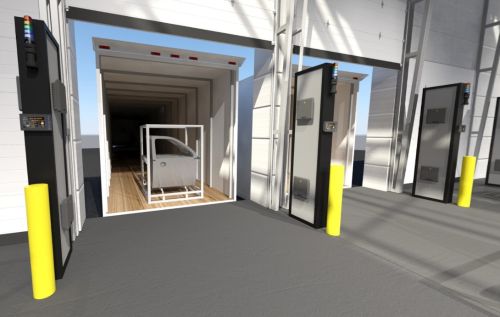
Asset data is captured automatically using RFID and managed through a connected software platform. Real‑time visibility is shared across systems, with automated verification at key handoff points like dock doors. |
||||||
|
|
|
||||||||
|
|
|
||||||||
|
|
|
||||||||
|
|
|
||||||||
|
|
|
||||||||
|
|
|
||||||||
|
|
|
||||||||
|
|
|
||||||||
|
|
|
||||||||
|
|
|
||||||||
|
|
|
||||||||
| Significant annual downtime costs, in addition to asset loss and replacement expense exceeding possible costs of $100,000s | $10,000s in hardware investment, while downtime and asset loss remain largely unaddressed. | $10,000s for full deployment, with predictable annual software costs and elimination of downtime due to lost assets. | ||||||||
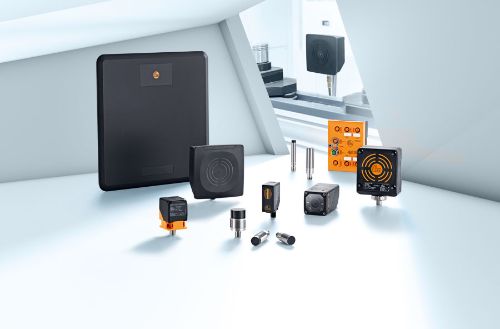
This track and trace solution leverages UHF RFID technology, asset tracking systems, and identification technologies to monitor asset items, containers, and vehicles across docks, storage, and transit environments.
The platform integrates UHF RFID technology, asset tracking systems, and supply chain management tools to deliver scalable, real-time traceability across logistics operations.

Proven performance:
ifm enables traceability and data transparency across thousands of applications worldwide, supporting large-scale tracking of assets, materials, and processes in real time.

Seamless integration:
System-agnostic hardware and software platforms ensure interoperability across PLCs, ERP systems, and industrial networks—making it easy to integrate traceability into existing environments.

Data ownership:
ifm’s platform provides full ownership of tracking data, giving organizations complete control over how information is used, stored, and leveraged for operational improvement.

Industry expertise:
With deep experience across manufacturing, logistics, and industrial environments, ifm delivers targeted solutions that improve transparency, throughput, and overall operational efficiency.
Dive deeper
Explore smarter gate tracking with wireless automation—delivering reliable data through intelligent, intuitive, and scalable RFID solutions.
Explore ifm's gate tracking solution
Get started
Start your traceability journey and gain real-time visibility into asset movement, location history, and logistics flow with ifm’s Track & Trace solution.