Semiconductor industry: much more than just a cleanroom
When people think of semiconductors, they usually picture wafers and people dressed in white suits, wearing face masks and gloves. However, turning raw silicon into high‑value computing chips takes far more than that: it requires stable and precise processes. And plenty of automation technology. This edition of Impulse – the ifm show explores where and for what purposes semiconductor technology is deployed, and how Europe currently stands as a location for semiconductor manufacturing.
Topics of this edition
- Overview: The semiconductor industry from the perspective of automation technology. What solutions are available, and what potential exists for further optimisation? The answers. (0:00 – 4:54)
- Insight I: The chemical dosing system (CDS) in the subfab of wafer production ensures a continuous and highly precise supply of chemicals to the wafer manufacturing process. What role does digitalisation play in this context? Answers from Daniel Versen. (4:55 – 8:43)
- Insight II: Vacuum pumps are another essential component of the subfab. Marius Löcker explains how these can be monitored effectively using a hardware-software solution from ifm. (8:44 – 14:06)
- Interview: Asia, the USA – and then what? Does Europe have the potential to play a significant role in the semiconductor industry? Julia Nitzschner from Silicon Saxony, Europe’s largest microelectronics cluster, assesses the current situation and explains what is still needed to ensure a positive future development. (14:07 – 21:21)
- Application: PVA TePla AG develops and manufactures equipment for the production of monocrystalline ingots. Automation technology from ifm helps to maintain stable ingot production. (21:22 – 26:17)
Host
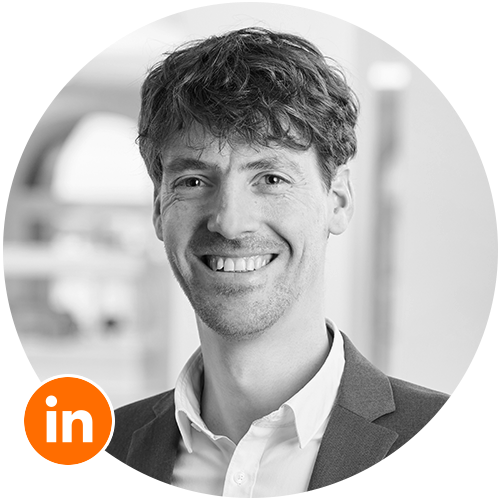
Guests

Daniel Versen has been with ifm for over 10 years and, as Director of Product Management, is responsible for the strategic direction in the semiconductor, solar PV, electronics and data centre sectors.
Drawing on his many years of experience in product management, he bridges the gap between market requirements and technological development, driving innovative solutions from concept through to implementation. In his role, he acts as the interface between customers, development and sales, and actively shapes the further development of sensor technologies for demanding applications in international markets.
A particular focus is placed on increasing efficiency, scalability and digital transformation – from leading semiconductor manufacturing facilities to state-of-the-art data centres.

Marius Löcker has been working as a Sales Engineer at ifm since February 2024, specialising in the company’s AI-powered products.
Having spent seven years in sales at a major industrial company and having focused his studies on process optimisation in industry and AI applications, he is responsible for developing new sales channels for AI-based products and advising ifm’s sales team on AI and data science.
His tasks also include supporting the market launch of new products.

In her work at Silicon Saxony, Julia Nitzschner has spent the past few years closely studying the technological and geopolitical developments in the international semiconductor industry.
Through the production of specialist articles, magazines and technology formats, as well as interviews with experts from industry, research and politics, she has gained in-depth knowledge across the semiconductor value chain – from chip design and manufacturing to European industrial initiatives and issues of technological sovereignty. She regularly shares this knowledge in podcasts, panel discussions and as a moderator at national and European specialist events.
A particular focus of her work is the weekly semiconductor podcast ‘What’s Chippening’, in which she analyses and contextualises current developments in the international chip industry alongside Frank Bösenberg, a semiconductor expert and Managing Director of Silicon Saxony.
Photo copyright: Silicon Saxony | Tommy Halfter


