- TA sanitary temperature transmitters
- Setup and support
TA temperature transmitters installation guidelines
For the best performance of the TA family of sensors, please adhere to the guidelines on this page.
Should you need additional support, feel free to contact our service center at 888-704-0702 and speak to one of our applications engineers.

There are five variants for the sanitary TA family as shown in the table below.
| Description | Process connectors | |
|---|---|---|
|
Ø6 mm stick probe, 50…350 mm insertion length |
Required. Use E30144 compression fitting and one of the process connectors below. |
|
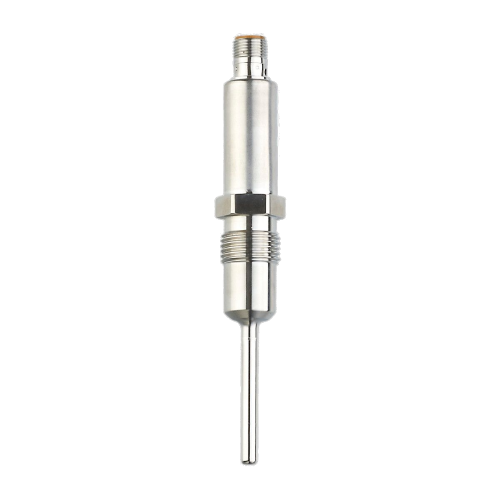 TA25xx TA25xx |
Ø6 mm probe, 30…150 mm insertion length, G ½” sanitary sealing cone |
Required. Use E43911 PEEK sealing ring and either a clamp fitting or welding fitting. |
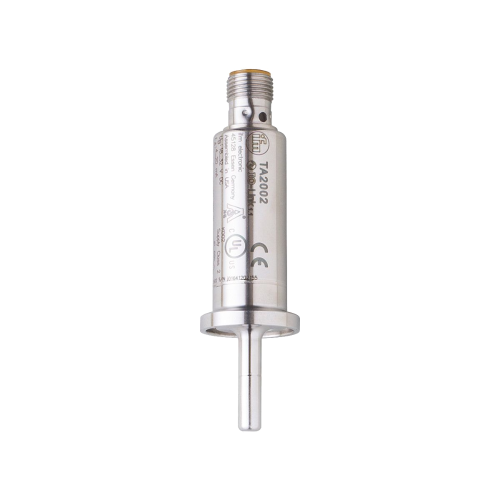 TA20xx TA20xx |
Ø6 mm probe, 25…60 mm insertion length, integrated ¾” triclamp |
N/A – ¾” triclamp connection is integrated. |
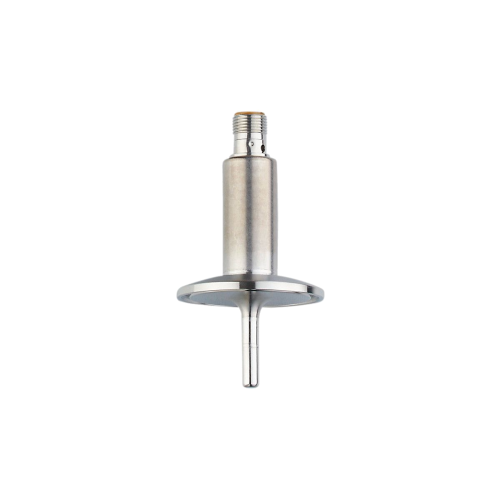 TA28xx TA28xx |
Ø6 mm probe, 30…150 mm insertion length, integrated 1.5” triclamp |
N/A – 1.5” triclamp connection is integrated. |
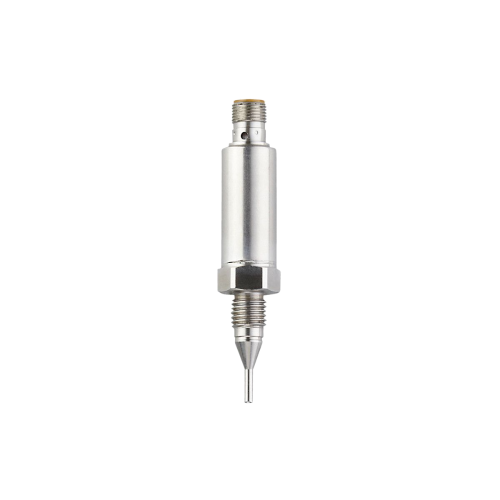 TA11xx TA11xx |
Ø3 mm probe, 17…83 mm insertion length, M12 sealing cone |
Required. Use E43915 PEEK sealing ring and a weldable fitting. |
 TA13xx TA13xx |
Ø3 mm probe, 17…83 mm insertion length, G 3/8” internal thread |
Required. Use a thermowell of appropriate length. |
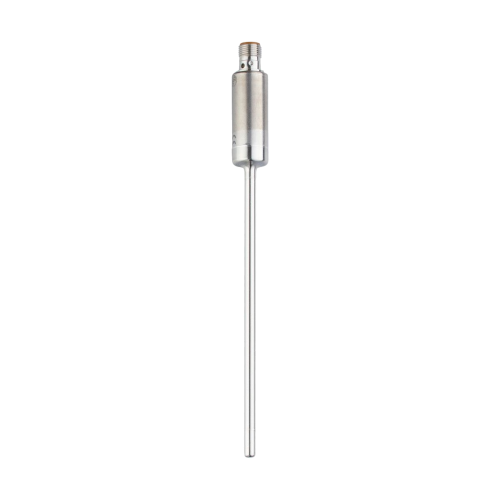 TA22xx
Sensor orientation
For best cleanability, do not install the sensor at the lowest point of the pipe or tank as shown by position 5 in the image. This allows the medium to run off the probe and avoid building up over time.
Leakage ports, or weep holes, in process fittings, are required for installations in accordance with 3A guidelines. When an o-ring is place, the process medium remains in the tank or pipe. If that o-ring is compromised, i.e. missing or damaged, the medium will leak at the weep hole. This is an indication that the o-ring must be replaced.

Typical orientation of a leakage port
Be sure to install the fitting such that the weep hole points downward.
To avoid dead space, adhere to the dimensions shown and ensure L < (D – d).
