
Radar sensors
Today’s most innovative radar sensors are transforming this technology’s capabilities in mobile and industrial applications. Advances in resolution, precision, recognition, and object filtering enhance radar sensor efficacy in positioning, level detection, distance measurement, object detection, and collision avoidance.
Older radar sensors are environmentally-robust, but they often can't match the precision and detail of 3D cameras or newer laser/LiDAR or ultrasonic systems. Meanwhile. those newer technologies struggle in harsh environments and certain applications.
Now, cutting-edge radar sensors detect smaller objects with superior range resolution and millimeter-level accuracy. They feature 4Ghz bandwidth and frequency-modulating controlled wave (FMCW) . Patented smart filtering algorithms quickly and easily identify an unprecedented range of materials and objects.
These innovations retain radar’s cost-effectiveness and enhance performance even in applications where other technologies struggle.
Radar sensors from ifm offer exceptionally high price-to-performance ratio in many different applications and environments. Use the tables below to find the best one for your use case.
Area and distance radar sensors
Our Radar distance sensors and radar area sensors maintain precise reliability and accuracy in rain, snow, extreme temperatures, heavy dust, and other demanding operational environments with exceptional resistance to vibration and shock.
They feature plug-and-play installation that gets radar operational in minutes, and integrate seamlessly with existing setups using J1939 or IO-Link communication protocol.
ifm’s proprietary Vision Assistant identifies and filters for challenging materials and in applications where traditional sensors struggle.
R1D Narrow beam radar distance sensor |
R2D Wide beam radar area sensor |
||
|---|---|---|---|
| Opening angle | 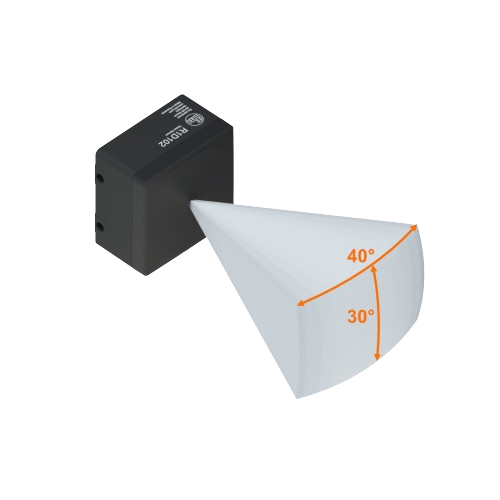 40° x 30° |
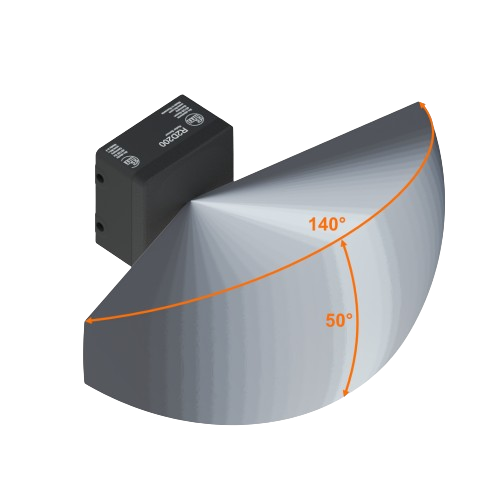 140° x 30° |
|
| Operating frequency | 60 GHz - Industrial (measuring objects from a stationery/fixed location) 77 GHz - Mobile equipment (measuring objects from a moving vehicle) |
||
| Typical applications |
|
|
|
| Communication protocol | IO-Link CAN J1939 |
||
| Capability | Distance measurement Velocity measurement |
Distance measurement Velocity measurement 2D & 3D position of objects Multiple process value of multiple objects |
|
| Field of view & ROI | Adjustable max. range | Adjustable opening angles Adjustable x-; y-; z-axes Up to 8 alarm zones configurable* Up to 2 exclusion areas configurable* |
|
| Article numbers | Industrial | R1D102 - IO-Link | R2D102 - IO-Link (Point cloud) R2D103 - CAN (Point cloud & Object list) R2D111 - IO-Link (Object list) |
| Mobile | R1D201 - CAN J1939 | R2D200 - IO-Link (Point cloud) R2D201 - CAN (Point cloud & Object list) R2D210 - IO-Link (Object list) |
|
 |
R1D1 Industrial radar sensors R1D2 Mobile radar sensors |
||
*Applicable only to "object list" version. See part number below.
Area and distance radar sensor accessories
Browse the most common accessories for ifm radar sensors. Find more options by clicking on a specific sensor model above for all compatible products.
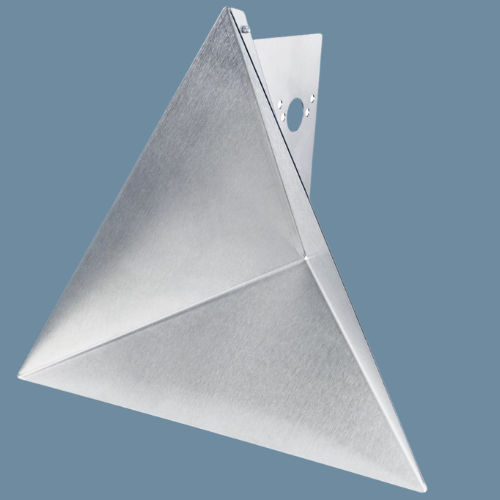 Radar corner reflectors |
|
|
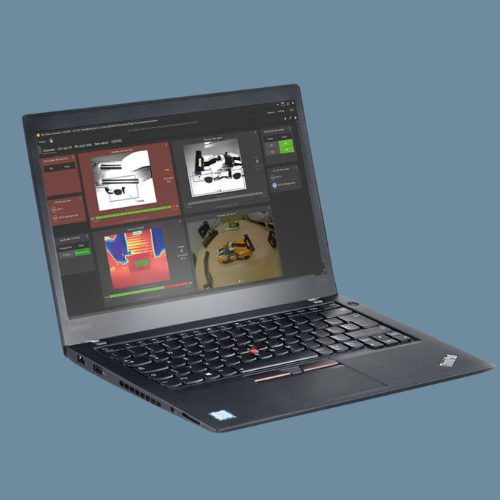 Vision Assistant software |
|---|---|---|---|
|
63.6 x 59.2 x 67.2 mm |
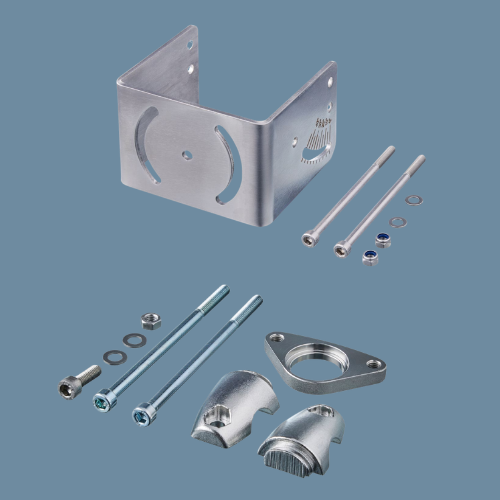
Swivel bracket Adjustable bracket with tilting angle up to 45º Adjustable bracket with tilting angle up to 20º |
IO-Link CANfox for connecting CAN devices to USB interface Wired adapter cable for CAN or RS232 interface Integrated CAN bus terminating resistor in connector housing |
Vision Assistant software |
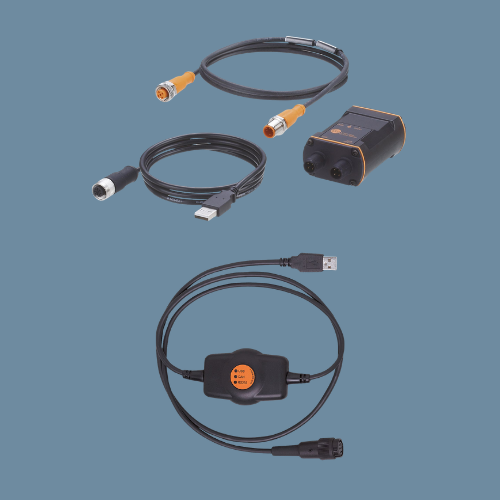 Programming cables
Radar level sensors
Radar level sensors from ifm provide excellent accuracy for level detection for specific applications.
LW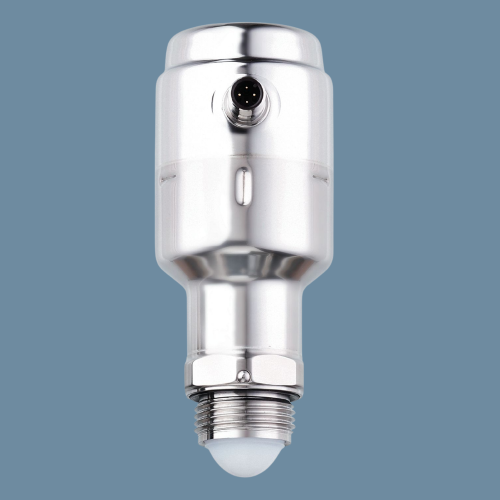 Noncontact radar level sensor |
LW Noncontact radar level sensor |
LR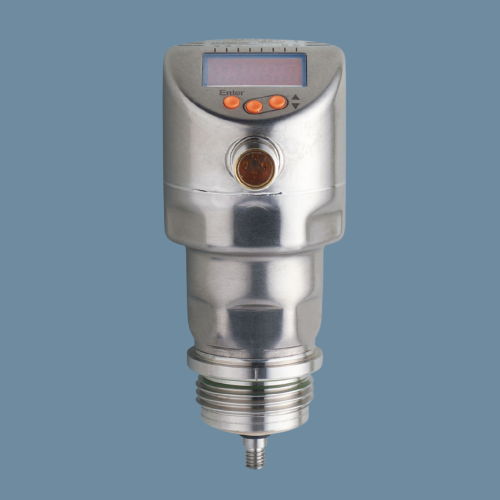 Guided wave radar level sensor |
LR Guided wave radar level sensor |
R1D Narrow beam radar distance sensor |
|
|---|---|---|---|---|---|
| Open tank & outside applications | Sanitary | Industrial, oil & water applications | Sanitary | Bulk material, liquid, load distribution | |
| Article numbers |
LW2120 | LW2720 | Browse models |
LR2750 | R1D102 (Industrial) R1D201 (Mobile) |
| Accessories |
Antenna extension |
Weld adapter Triclamps Mounting adapters Universal adapter |
Mounting adapters Weld adapters Level sensor probes |
Radar corner reflectors |
|
|
LW radar level sensors | LR radar level sensors | |||
Cutting-edge radar sensors provide better clarity, detail, and object mapping in more applications:
- Reliable detection of materials and objects with low dielectric constant
- Enhanced resolution and measurement accuracy down to the millimeter
- Expanded, easy-to-retrieve object recognition
These breakthroughs enhance radar performance and expand mobile and industrial use cases:
- Advanced frequency-modulated signal processing
- Wider bandwidth range
- Patented GUI (user interface) and smart parameter filters
The basics: How radar works
Radar sensors work by using radio waves to detect and track objects by transmitting electromagnetic waves and analyzing their reflected signals. An object’s ability to be seen by radar is influenced by its shape, size, material, and angle of incidence. Radar sensors have stable measuring signals and perform quick measurements. They are a key technology in mobile and industrial settings.
Next-generation technology
Technological advancements enable the most innovative radar sensors to provide more data and with better accuracy. Frequency-Modulated Continuous Wave technology adds more possible metrics, while expanded bandwidth provides more detail to objects. Combining these with a sophisticated parameter tool allows prevents signal interference and streamlines object identification.
- Advancing radar sensor technologies: Advancing radar sensor technologies. Innovative radar sensors now use frequency-modulated continuous wave (FMCW) technology for superior results over traditional continuous wave (CW) and pulsed wave system.
FMCW can measure multiple kinematic qualities with more accurate results by using frequency change instead of just time delays. Pulsed radar is still superior for long-range detection, making it more suitable for weather or military use. But, FMCW performs better for shorter-range industrial and mobile applications. - 4GHz range: Expanding bandwidth for better accuracy. A radar sensor with a bandwidth of 4 GHz can resolve finer details with greater accuracy and precision than one with a 1 GHz bandwidth. The wider bandwidth improves range resolution and enables more sophisticated signal processing by allowing the radar to extract more detailed information from the same physical space as a 1 GHz sensor.
- Vision Assistant software: Making visualization and configuration fast and easy. The ifm Vision Assistant software makes all the enhanced measurements and operations of a 4GHz radar sensor actionable and easy to understand. This parameter adjustment tool allows users to quickly configure their radar sensor’s settings and filters to identify a wide range of objects and substances. The advanced DSP algorithm also eliminates noise and interference.
Various radar sensors use different sensing technology and offer different measuring ranges, velocity ranges, and opening angles. To find the right radar sensor for your application, consider:
- Range: Whether you are measuring for objects a few inches away or a few feet or further.
- Environment: If a harsh environment, such as extreme heat or cold, weather, dirt and dust, oil and grease, steam and smoke, or overexposure or darkness, is a factor.
- Accuracy: How precise your measurements must be (e.g., within 1mm, within 1 inch, etc.)
-
Application: Level, object, or distance measurement require different distance and velocity ranges. Also, radar sensors must operate on different frequencies for field vs. industrial uses.
Communication protocols for radar sensors
With models supporting either J1939 or IO-Link communication protocols, or simple digitral or analouge outputs, radar sensors from ifm are compatible in virtually any industrial or mobile application environment. The various models also provide a wide range of distance measurement, and multiple process values with communication via two key operating frequencies.
Radar sensors vs. other technologies
Radar and other technologies, such as ultrasonic, 3D cameras, and LiDAR, all accommodate various level, distance, speed, and object detection applications. Generally, radar sensors outperform other sensor technologies in long-range applications and where environmental factors such as dust, extreme heat or cold, or extremely bright or low light are considerations:
- Laser or LiDAR provides high-resolution readings, but only works on a single plane and cannot detect clear or reflective surfaces. Radar offers a wider, two-dimensional field of view and registers clear and reflective objects.
- Ultrasonic technology is less expensive than radar, although the cost gap is closing. However, ultrasonic requires clean, stable conditions. Wind or pressure changes affect its performance. And, it cannot detect objects through plastic or glass.
- 3D cameras offer more detail than radar but are more expensive and less reliable in poor visibility. Radar cannot produce images or identify objects. However, radar sensors are better for long-range applications and speed detection in harsh environments.

Reliability
Radar sensors provide reliable measurements across their entire detection range.

Environmental resistance
Radar tolerates extreme heat and extreme cold. It works despite bad lighting conditions ranging from overexposure to total darkness.

Versatility
Radar measures long ranges and provides millimeter precision in many common industrial and mobile applications.

Contactless
operation
Sensors perform without touching measured objects, preventing damage and malfunction.

Maintenance-free
performance
Radar sensors have no moving parts and are, unaffected by dust, buildup, or corrosive materials

Comprehensive data
collection
Advanced radar systems can detect multiple objects and provide detailed, real-time data on position, distance, speed, and movement.