- SM magmeters
- Applications
Common magmeter applications
From safeguarding equipment against overheating to maintaining the quality of brewed beverages, the right magmeter can make all the difference. This advanced instrument stands out for its precision, versatility, user-friendly design, and ability to adapt seamlessly to diverse requirements. Discover how the SM magnetic inductive flow meter compares to other flow measurement solutions in a variety of industries.
Flow metering applications for conductive media
Magmeters rely on the principle of electromagnetic induction, which requires the fluid being measured to have a certain level of electrical conductivity. The SM series of magmeters require a minimum conductivity of 20 µS/cm, making them suitable for most water-based media. They measure up to 160 gpm in a 2" pipe.
General cooling water flow
Overheating of equipment leads to increased wear and eventually to production downtime. Continuous monitoring of cooling water ensures process reliability for such applications.
The low-profile design allows you to monitor cooling water supply and return lines in close manifolds. The magnetic inductive technology provides high accuracy at an affordable price.
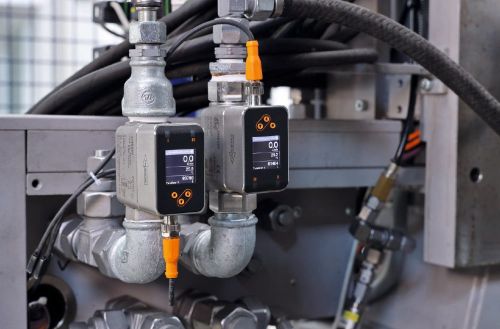
SM flow meters monitor flow in both directions of a cooling loop.
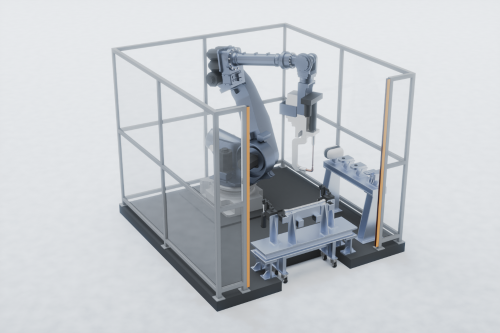
Welding robots use water to cool components.
Welding cells
Maintaining stable cooling water flow is essential in a welding cell to prevent overheating, ensure consistent weld quality, and extend equipment lifespan. When cooling flow is insufficient or inconsistent, it can lead to poor weld penetration, weak joints, and structural defects, all of which impact product quality and reliability.
Traditional mechanical flow meters are prone to drift, sticking, or breaking, resulting in unplanned downtime and process variation. The SM flow meter, designed without moving parts, reliably measure both flow and temperature, ensuring that your cooling systems perform consistently and effectively. Preventing process drift with accurate flow monitoring minimizes downtime and ensures a stable welding environment.
The SM magmeter can provide a simple switch point with a response time < 150 msec, so loss of flow is quickly confirmed. Learn more about ifm's solutions for welding machines.
Industrial furnaces
Industrial furnaces of all types generate significant heat during metal melting, making adequate cooling essential to ensure the furnace operates within the desired temperature range. Proper temperature is critical for producing high-quality metals with consistent properties. By monitoring the flow rate of cooling water or other cooling fluids circulating through the furnace, overheating can be prevented, protecting components and refractory linings from damage.
Traditional mechanical flow meters tend to drift, break or stick over time. However, ifm's flow meters reliably measure both flow and temperature with no moving parts, ensuring long-lasting accuracy. Maintain your furnace's cooling flow and safeguard process quality with ifm flow meters.
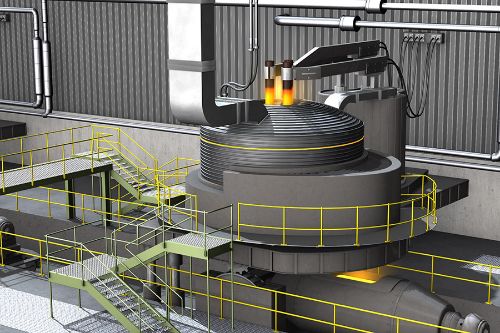
Electric arc furnace is just one type of industrial furnance that uses cooling water.
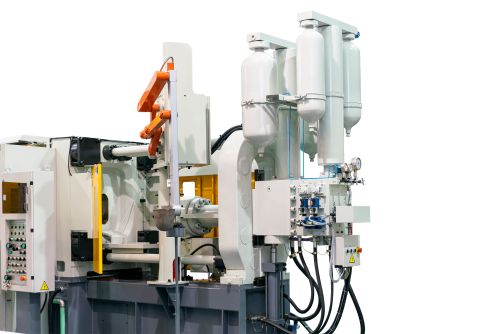
Die cast machines use cooling water to maintain product quality and machine uptime.
Die cast machines
Controlling the amount of cooling water to a die is critical for the solidification and quality of the molded part. The cooling water supply must be monitored continuously to ensure the highest quality. Inconsistent cooling flow can lead to overheating or warping, resulting in defective casts, thermal cracks, or reduced tool life.
ifm's SM flow meters offer a reliable solution by accurately measuring cooling water flow and temperature without the use of moving parts which can break or stick. This ensures consistent and uninterrupted cooling performance, keeping your die casting machine running smoothly while maintaining product quality. Learn about other solutions for die casting.
Chemical dosing skids
Flow sensors measure the flow rate of water or chemicals through the dosing skid. They ensure that the correct amount of chemicals are injected into the water stream based on the flow rate, helping to maintain accurate dosing levels. The rate of flow can indicate issues such as leaks or blockages in the system. Flow monitoring can help to minimize safety risks and environmental impact.
Traditional mechanical flow meters can break or stick over time, leading to inaccurate measurements. ifm's flow meters reliably measure flow and temperature with no moving parts.
ifm's SM magmeter provides high-precision measurement of all conductive media and offers accuracy independent of particles that may be present. It's 4-digit numerical display indicates flow rate, total volume and temperature. The pulse output can deliver resolution of 0.03 oz/pulse with an accuracy of ~1%.
Improve chemical dispensing accuracy with solid state flow sensing.
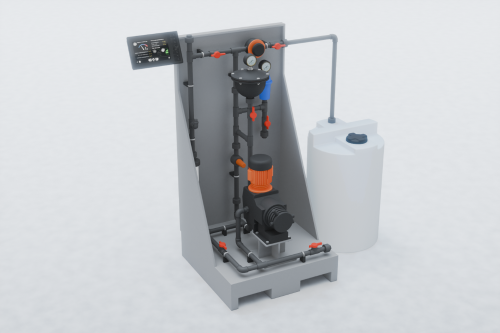
Chemical dosing skids require accurate flow measurement.
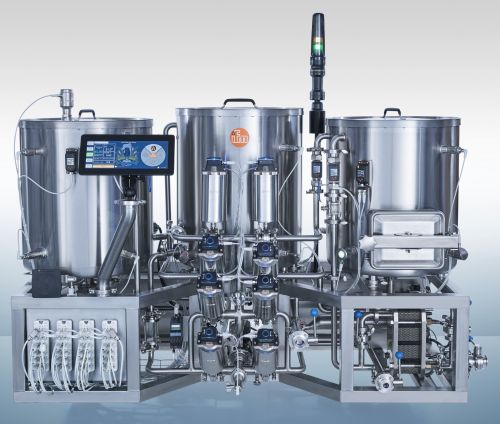
Flow meters help provide batch-to-batch consistency.
Brewing
Controlling the flow of ingredients and liquids, such as water, wort, or beer, throughout the brewing process automates the brewing process and allows for precise batch control and recipe adherence. Monitoring flow can detect issues like blockages or leaks in the flow lines. When abnormal flow conditions are detected, alarms or control actions can be triggered, preventing downtime.
Mechanical turbine flow switches are often used in brewing applications, but they have moving parts that can wear, become clogged or break. Additional gauges may also be required to have at-a-glance knowledge of your process.
ifm's SM magmeter provides high-precision measurement of media in brewing and keg filling applications. It offers accuracy independent of particles that may be present in the lauter tun-to-kettle process. It's 4-digit numerical display indicates flow rate, total volume and temperature.
It is so compact, it can be carried from tank to tank and used as a portable measuring device for flow rate and volume.