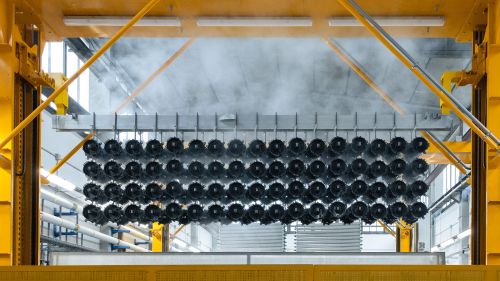
Preventing mill stand failures
Reducing steel manufacturer's equipment downtime and scrap rate
A leading steel manufacturer faced frequent mill stand failures, resulting in unplanned downtime, production losses, and costly scrap. To improve the situation, the company partnered with ifm to implement a solution focused on monitoring critical cooling parameters.
ifm’s expert engineers visited the manufacturing site to identify key failure points and proposed flow, temperature, and pressure sensors to monitor the cooling water system and bearing temperatures, enabling proactive shutdowns before equipment damage and unusable steel by-products occurred.

Results
- $2.5 million in cost savings over 5 years, driven by reduced unplanned downtime and lower repair expenses:
- Previous system averaged 4 failures per year, causing 56 hours of unplanned downtime and $232,000 in loss.
- Mill stand repairs cost approximately $276,000. - 280 labor hours saved over 5 years.
- Significant reduction in scrap rate, minimizing material waste and improving yield.
The challenge
- Frequent mill stand failures, causing severe production disruptions across 18 critical lines.
- At least 14 hours of downtime per each overheating mill stand.
- Increased scrap rate, generating unusable steel by-products and reducing overall yield.
- Lack of real-time parameter monitoring to detect early warning signs and prevent equipment failure.
The solution
ifm engineers worked closely with the rolling mill engineering team and found out that the most important parameters to monitor were the flow, pressure, and temperature of the cooling water, as well as the temperature of the bearings. The following solution was implemented.
- SM series magmeters were installed on the inlet and outlet mill stand cooling lines to measure both flow and temperature of the cooling water. This helped detect leaks, low flow conditions, and monitor cooling performance.
- PN series pressure sensors ensured the cooling system maintained proper pressure levels.
- TP/TS series temperature sensors monitored the mill stand bearing temperatures to prevent overheating.
- All sensor data was integrated into the mill’s control system. If any values, flow, pressure, or temperature, fell outside the normal range, the system sent immediate alerts so the affected mill stand could be shut down before considerable damage occurred.
Technologies
Explore the underlying technologies that power this solution.
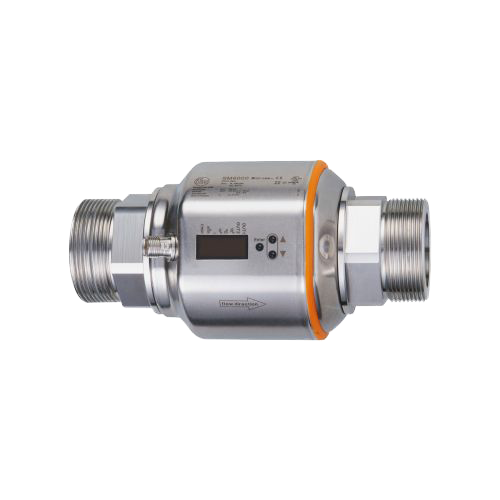
SM series magmeters accurately measured the flow rate, total flow, and temperature of the cooling water to ensure proper cooling process.

PN pressure sensors provided reliable pressure monitoring in the cooling system. These sensors can be used for both hydraulic and pneumatic systems.
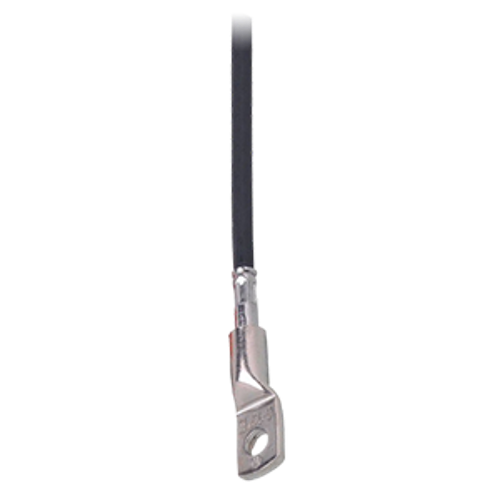
TP/TS temperature sensors were used to precisely measure bearing temperatures in mill stands and avoid overheating.

IO-Link technology was fundamental in real time monitoring. This technology allowed the sensors to communicate the health and condition data via ethernet for processing. IO-Link communication provided fully digital data, resulting in higher quality measurements eliminating analog conversions.
Jump to: