Find the right pressure sensor for your application
Pressure sensors can prevent damage or downtime caused by wear and tear of mechanical moving parts. They have a longer lifecycle than mechanical sensors that fail due to wear and tear.
ifm's product range of industrial pressure sensors offer different measuring principles, materials, and displays. They meet the requirements of different industrial manufacturing plant operations across the U.S.
Our product line ranges from simple water pressure switches and pressure transmitters to sophisticated sensors with multiple output signals. These robust, reliable electronic pressure sensors offer you the right solution for your pneumatic, hydraulic and sanitary applications.
Use the “Select by application” table below to narrow your search for a pressure sensor. Scroll down to read about pressure sensor basics. Or click the "Learn More" button for the underlying measuring principles and technology of each sensor group.
|
|
||||||||||||
|
|
||||||||||||
 |
 |
 |
 |
 |
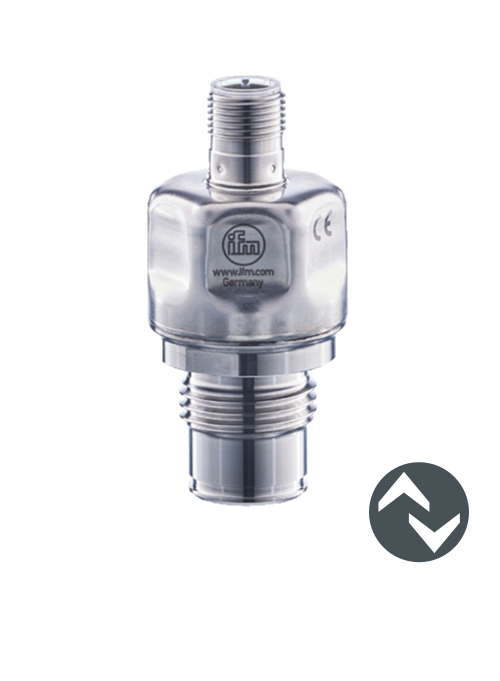 |
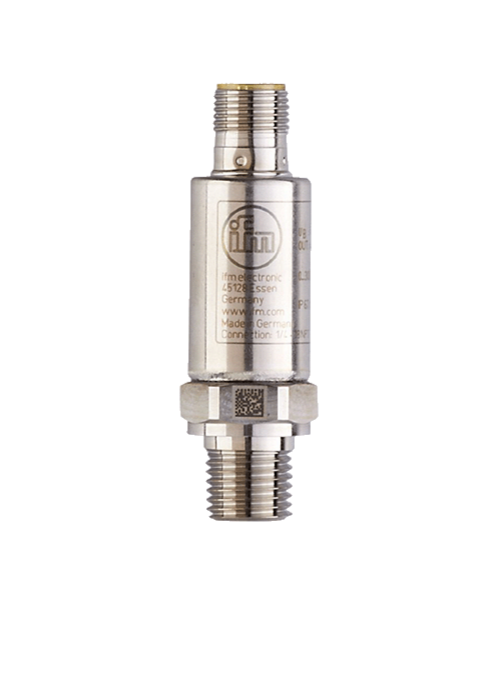 |
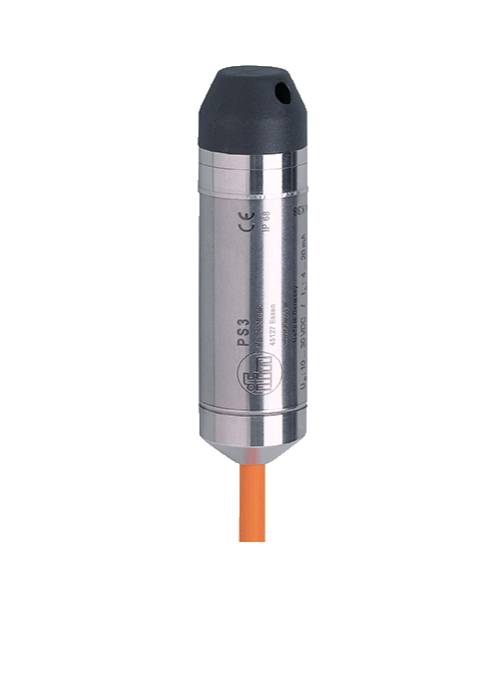 |
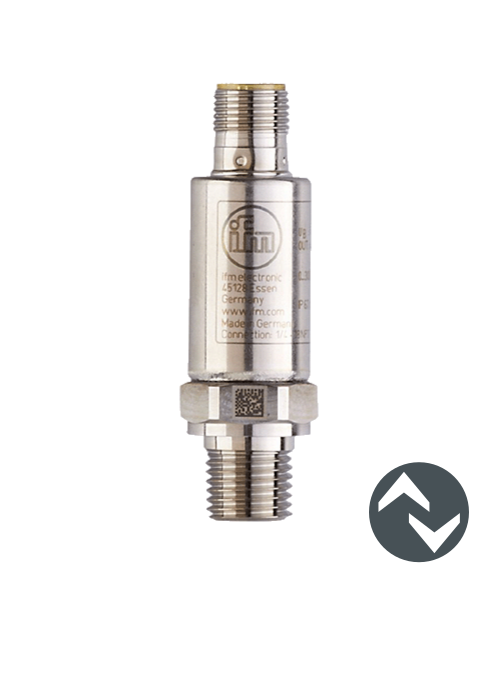 |
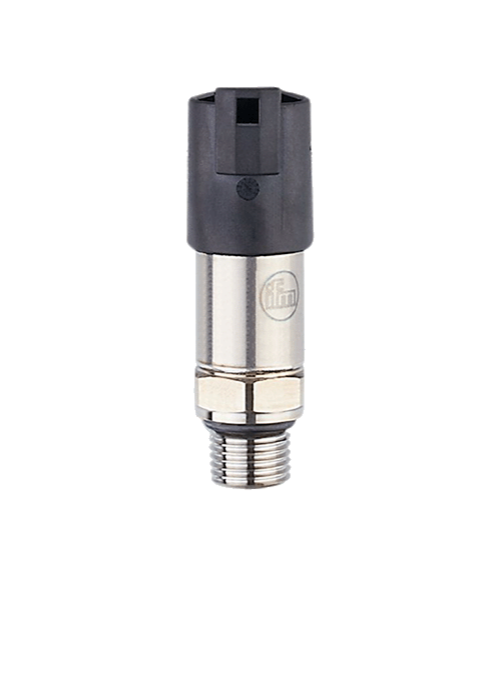 |
||||
| Specifications | |||||||||||||
 Measuring range |
-14.5…8700 psi | -14.5…5800 psi | -14.5…145 psi | -14.5…8700 psi | 0...5800 psi | -14.5…2320 psi* | -14.5…8700 psi | 0…14.5 psi | -14.5…8700 psi | 0…8700 psi | |||
 Hydrostatic level Hydrostatic level |
100…402 inH2O | 40…100 inH2O | 40… 401 inH2O | 100...401 inH2O | |||||||||
 Medium temp. |
-25...80 °C | -25...80 °C | 0...60 °C | -25...90 °C | -25...80 °C | -20...90 °C (PL54) -25...110 °C (PL15) |
-40...90 °C** | 0...60 °C | -40...90 °C | -40...125 °C | |||
 Output signal |
Transmitter Switch IO-Link |
Transmitter Switch IO-Link |
Transmitter Switch IO-Link |
Transmitter | Switch | Transmitter IO-Link (PL15 only) |
Transmitter | Transmitter | Switch IO-Link |
Transmitter | |||
| Media | |||||||||||||
 Hydraulic oil |
 |
|
|
|
|
|
|
|
|||||
 Water-based |
|
|
|
 |
|
|
|
|
|
||||
 Compressed air |
|
|
|
|
|
|
 |
|
|
||||
 Gases |
|
|
|
|
|
|
|
|
|
||||
 Viscous / Suspended particles |
|
|
|||||||||||
 Price |
 |
|
 |
|
 |
|
|
|
|
|
|||
 |
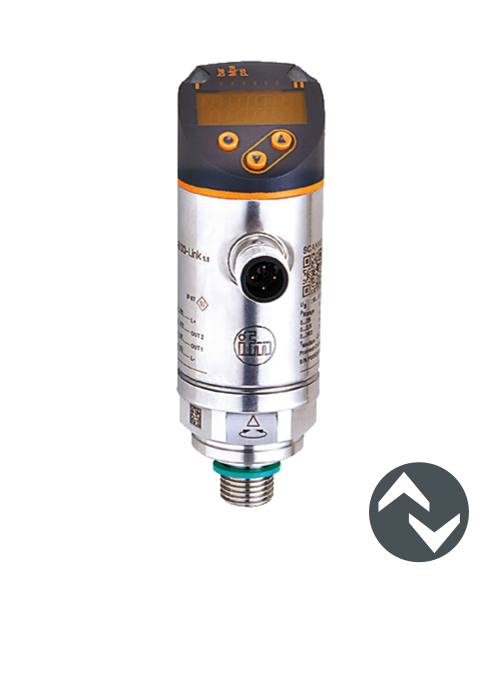
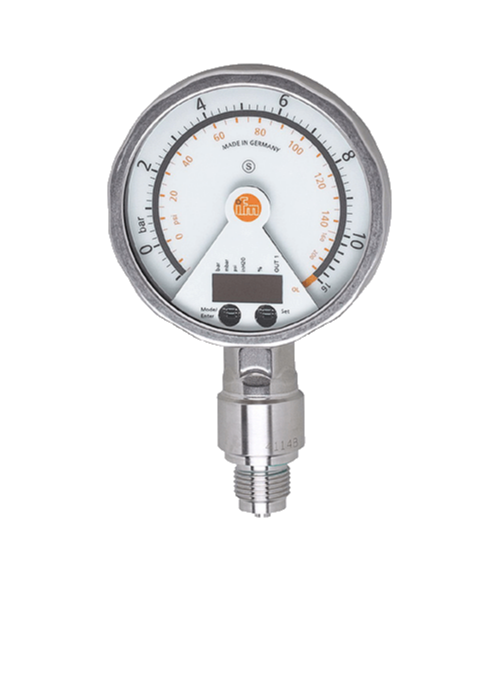
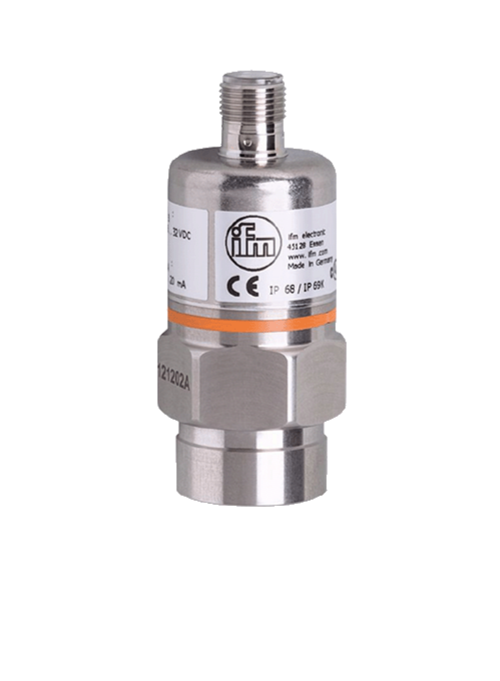
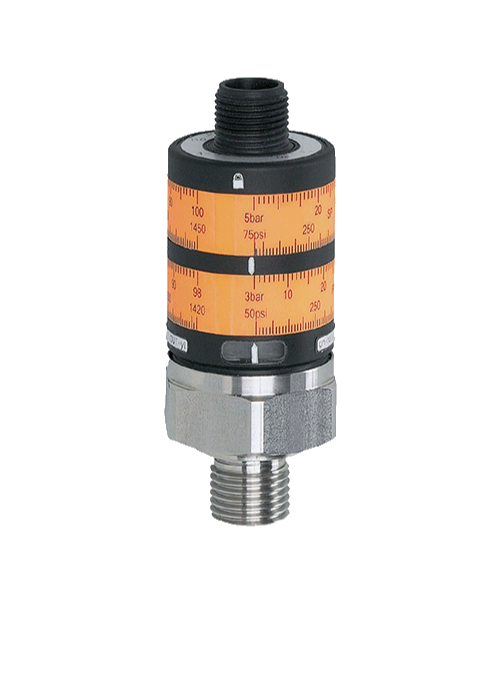
Sensors with digital display | Sensors with gauge display | Pneumatic air switches and sensors with display | Blind transmitters | Switches with adjustment dials | Flush mountable | Strain gauge transmitters | Submersible pressure transmitters |
Two switching outputs | For mobile applications | |||
| : Ideal application |
: Limited to < 363 psi due to ceramic cell |
: Stainless steel strain gauges can be used, but ceramic cells are recommended for applications prone to pressure spikes or water hammer |
: Do not use in application |
|
*measuring range up to 5800 psi with the PL54xx Each Learn More section contains information about pressure sensor installation, programming, and more |
|||
|
||||||||
|
|
|||||||
 |
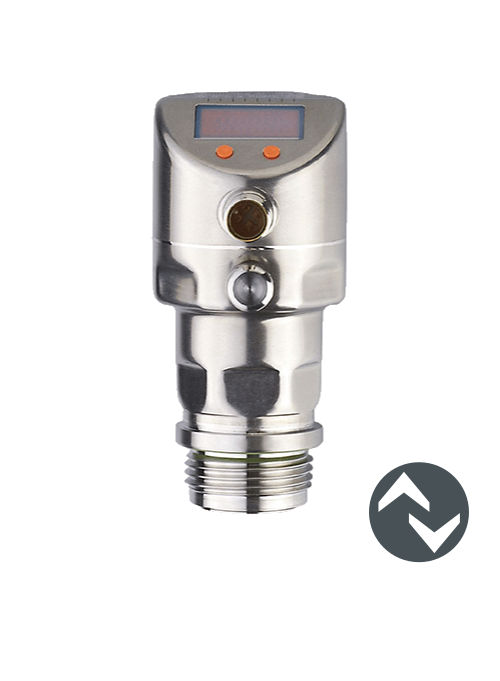 |
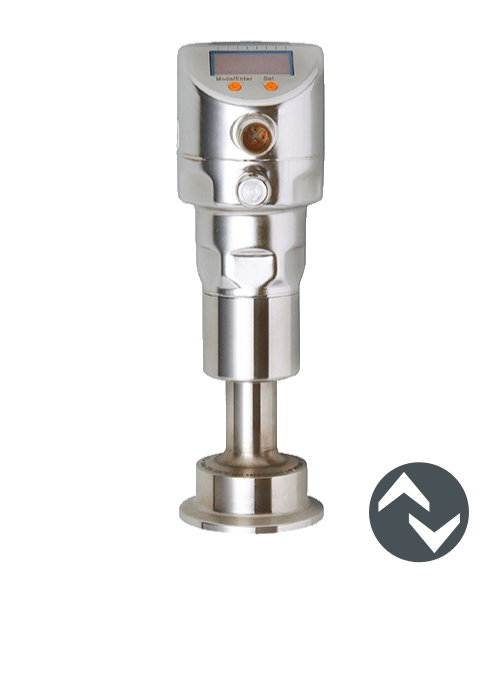 |
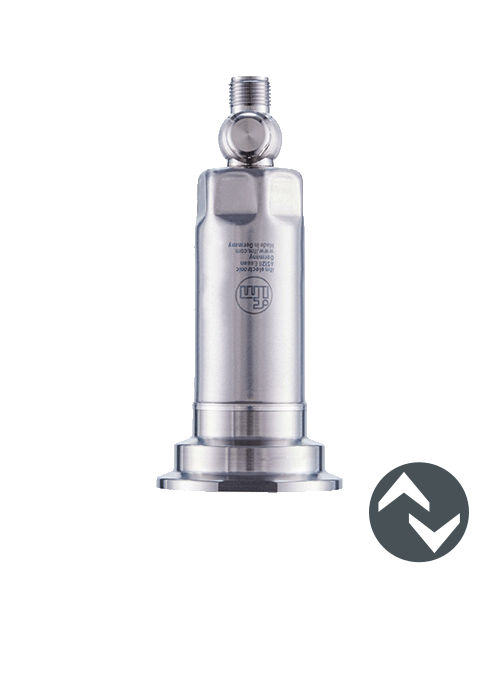 |
 |
 |
|||
| Specifications | ||||||||
Measuring range |
-14.5…363 psi | -14.5…363 psi* | -14.5…363 psi | -14.5…363 psi* | -14.5…580 psi | -1.82...36.26 psi | ||
Hydrostatic level |
40.16…100.4 inH2O | 40.15…1004 inH2O | 40.15…1004 inH2O | |||||
Medium temp. |
-25...150 °C | -25...150 °C | -25...200 °C | -25...150 °C | -25...125 °C** | -25...85 °C | ||
Output signal |
Transmitter Switch IO-Link |
Transmitter Switch IO-Link |
Transmitter Switch IO-Link |
Transmitter IO-Link |
Transmitter IO-Link |
Transmitter IO-Link |
||
| Unique product features | ||||||||
 Selection criteria |
High visibility gauge style display | Flagship sensor w/ bright LED display |
High-temp applications / Highest resistance to thermal shock |
Ideal choice when a display is not necessary | Best option for smaller line sizes | Best option for insulated tanks | ||
Price |
|
|
|
|
|
|
||
|
Sanitary pressure gauges, Type PG | Sensors with display, Type PI | Flush transmitters, Type PM | Flush transmitters, Type PY | ||||
| : Ideal application |
: Do not use in application |
|
| *measuring range up to 1450 psi with the Pxx602 **temperature range up to 150 °C for less than an hour |
||
Technology overview
Learn how different types of pressure sensors use electric signals and digital technology to measure pressure.
| Ceramic capacitive | Diaphragm seal | Stainless steel strain gauge | Piezorisistive | |
|---|---|---|---|---|
| Pressure range | 100 mbar...600 bar | 1...400 bar | 6...600 bar | 1...10 bar |
| Vacuum resistance | -1 bar | -1 bar | -1 bar | -1 bar |
| Overload protection |  |
 |
 |
|
| Robustness | |
|
|
 |
| Long-term stability | |
|
|
|
| Accuracy | |
|
|
|
| Large housing | |
|
|
|
| Reistant to: | ||||
| drift due to tightening torque | |
|
|
 |
| Temperature | |
|
|
|
| Aggressive media | |
|
|
|
| Price | |
|
|
|
not available
conditionally suitable
How do ceramic capacitive pressure sensors work?
The most important element of the ceramic capacitive technology is the ceramic (Al2O3) measuring cell. After assembly, the ceramic cell element resembles a plate capacitor with a reference electrode and a measuring electrode placed 0.01 mm apart.
The capacitance is inversely proportional to the distance between the electrodes. As a medium applies force, the distance changes by a small value and the capacitance changes proportionately. This signal is then converted into pressure by a microprocessor.

- PCB microprocessor evaluates capacitance and converts into a pressure value
- Ceramic capacitive base
- Outer ceramic diaphragm
- Applied pressure forces plates together and changes capacitance which is proportional to pressure
Note: The body of the sensor is different for the various families, but the measuring cell assembly is the same for all.
| Sensors using ceramic capacitive measuring principles: | |
|---|---|
|
|
How do diaphragm seals work?
In diaphragm seal technology, the process pressure is not applied directly to the sensor, but is transmitted via a diaphragm with a filling liquid behind it. The diaphragm itself separates the medium in the process from the sensor system. It is flexible and deforms when pressure is exerted on it. Behind the diaphragm is a special filling fluid (usually oil) that transfers the pressure from the diaphragm to the actual pressure sensor.

- Measuring cell
- Hexagon spanner flat
- Sealing groove
- Process connection
- Metal diaphragm
- Measuring tunnel with oil
- Filling screw
| Sensors using diaphragm seals: | |
|---|---|
|
How do stainless steel strain gauge pressure sensors work?
Strain gauges are attached to the stainless steel measuring cell. Pressure of the medium on the measuring cell causes deflection of the strain gauge, which creates a change in resistance. Tension (positive strain) increases resistance and compression (negative strain) decreases resistance. The change in resistance is proportional to the pressure applied.
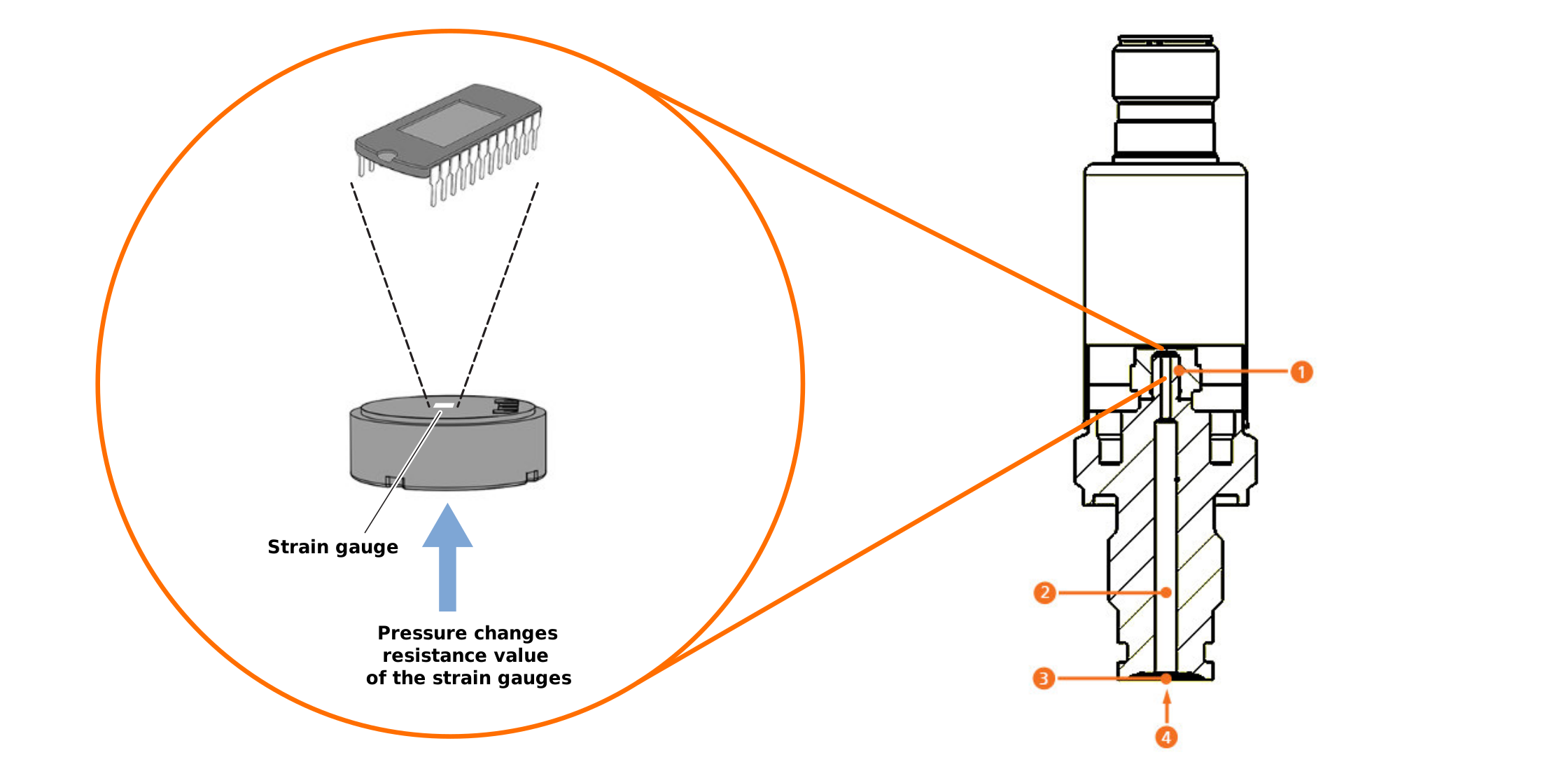
Note: The body of the sensor is different for the various families, but the measuring cell assembly is the same for all.
- Strain gauge attaches to the stainless steel measuring cell
- Fluid behind diaphragm transmits pressure to the measuring cell
- Flexible stainless steel wall of diaphragm provides the process interrface
- Applied pressure changes resistance within the strain gauge proportional to the pressure

The piezoresistive effect describes the change of the electric resistance of a material caused by pressure or traction. This change in resistance is detected by a bridge circuit (R1 - R4) and converted into an industry-standard output signal.