Select the perfect digital temperature sensor for your application requirements
Industrial machines often require a consistent temperature measurement to ensure production quality and understand machine condition. ifm developed a robust temperature sensor product line to fit the needs of a variety of industries. Using Resistive Temperature Detector (RTD) technology and undergoing stringent environmental testing, ifm encases temperature sensors in hermetically sealed stainless steel designs to ensure top quality performance in the harshest of conditions. ifm’s reliable temperature sensing solutions offer compact housings, extremely fast response times, easy M12 electrical connections and 316 stainless steel construction.
Use the “Select by application” table below to narrow your search for a temperature sensor and read more about the underlying measuring principles and technology of a sensor group by finding the orange “Learn More” row.
|
|
|
||||||||||
 |
 |
 |
 |
 |
 |
 |
 |
 |
||||
|---|---|---|---|---|---|---|---|---|---|---|---|---|
 Temperature range Temperature range |
-58…302 ºF -50…150 ºC |
-58…392 ºF -50…200 ºC |
32…212 ºF 0…100 ºC |
-13…320 ºF -25…160 ºC |
-58…302 ºF -50…150 ºC |
-58…392 ºF -50…200 ºC |
-4…284 ºF -20…140 ºC |
32…4532 ºF 0…2500 ºC |
-58…302 ºF -50…150 ºC |
|||
 Insertion length |
1.18…13.78" 30…350 mm |
0.6…13.78" 15…350 mm |
flush seal | 1.18…39.4" 30…1000 mm |
1…5.9" 25…150 mm |
1.…13.78" 20…350 mm |
2…9.8" 50…250 mm |
non-contact | 1…7.9" 25…200 mm |
|||
 Output signal Output signal |
Analog (4-20 mA) IO-Link |
Analog (4-20 mA) IO-Link |
Analog (4-20 mA) |
Analog (4-20 mA) Calibration check status* IO-Link |
Analog Switch IO-Link |
Analog (4-20 mA) IO-Link |
Complementary switch | Analog Switch IO-Link |
Analog (4-20 mA or 0.5-4.5VDC) |
|||
 Pressure rating Pressure rating |
100 Bar 160 bar |
100 Bar 160 bar |
16 bar | 160 bar | 250...400 bar | 160...400 bar | 300...400 bar | non-contact | 300...400 bar | |||
 Response time* Response time* |
1 / 3 sec | 0.5 / 2 sec | 10 / 40 sec | 1.5 / 4 sec | 1 / 3 sec | 1 / 3 sec | 1 / 3 sec | various | 1 / 3 sec | |||
 Accuracy Accuracy |
+/- 0.54 ºF | +/- 0.54 ºF | +/- 0.45 ºF | +/- 0.36 ºF | +/- 0.54 ºF | +/- 0.54 ºF | +/- 0.54 ºF | +/- 0.54 ºF | ||||
 Display Display |
 |
 |
|
|
|
|
|
|
|
|||
 Price |
 |
 |
|
|
|
 |
|
|
|
|||
 |
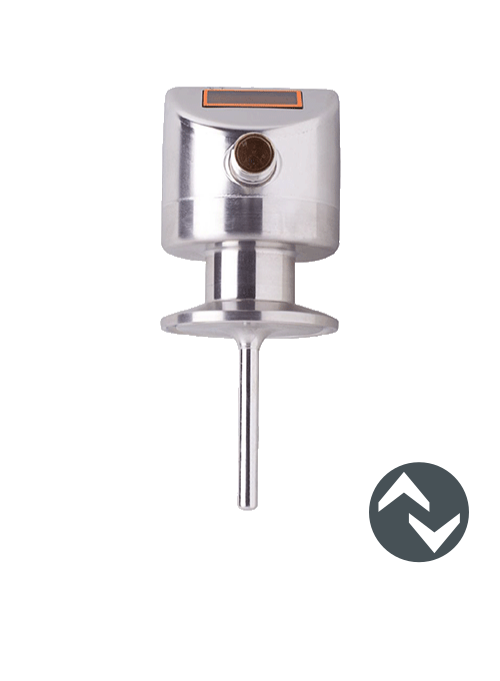
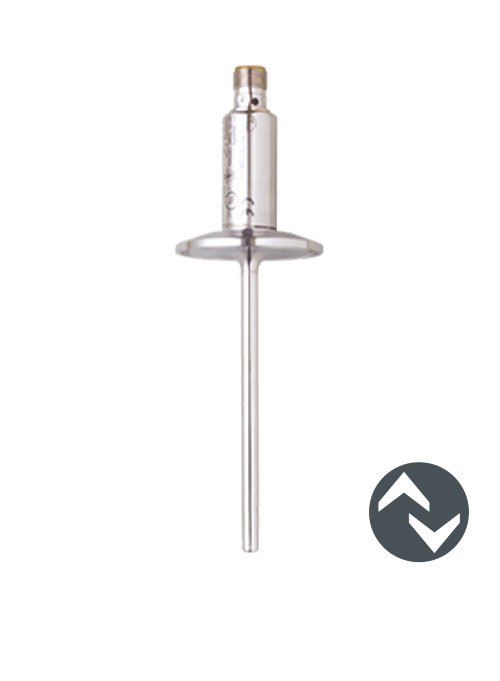
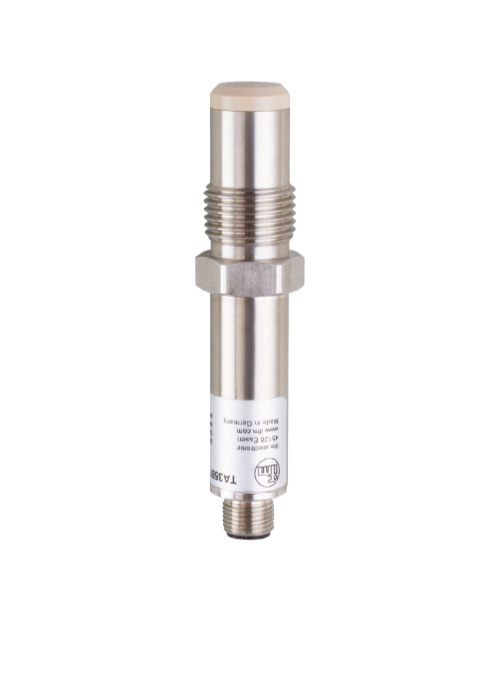
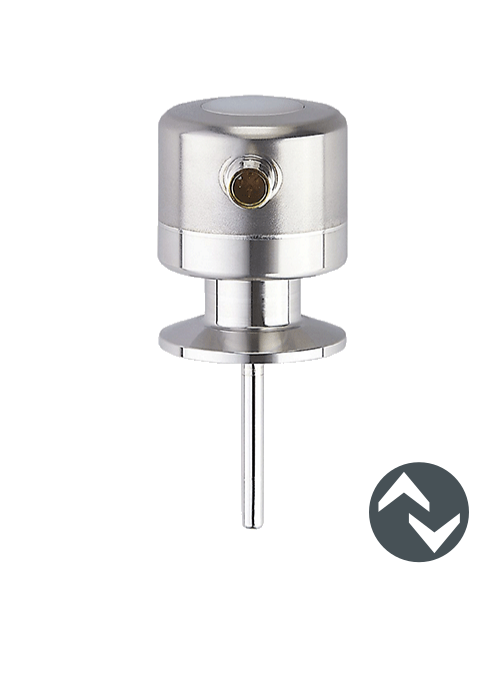
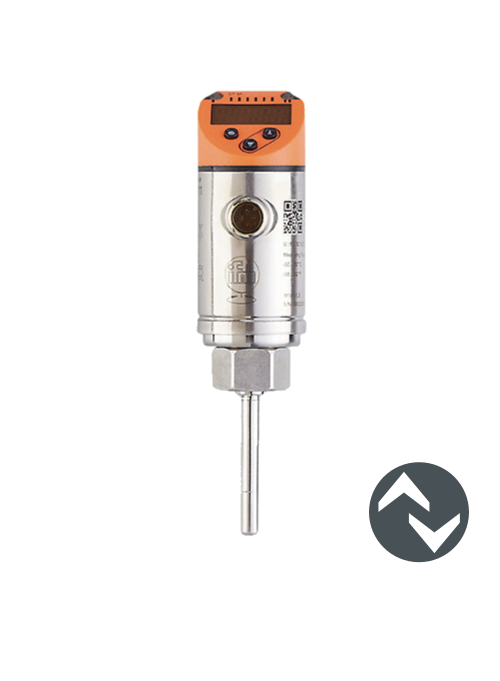
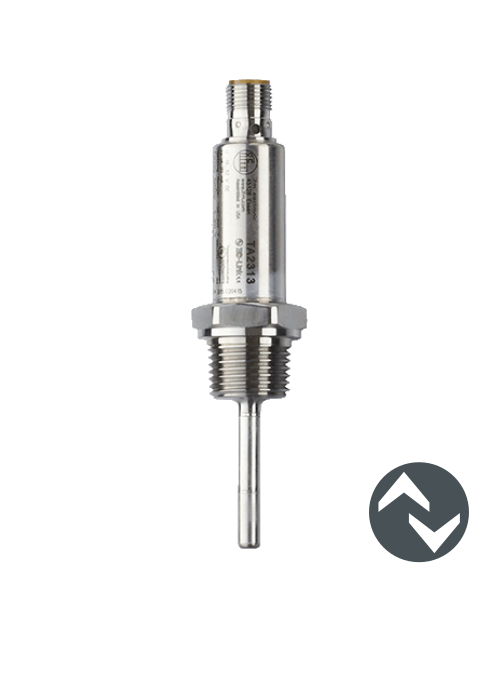
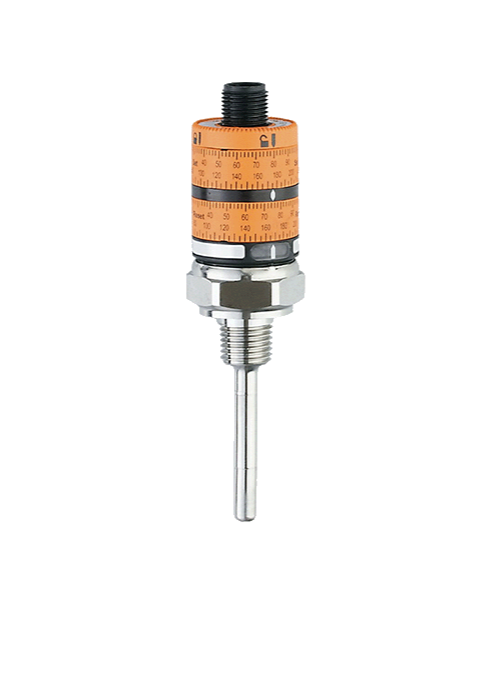
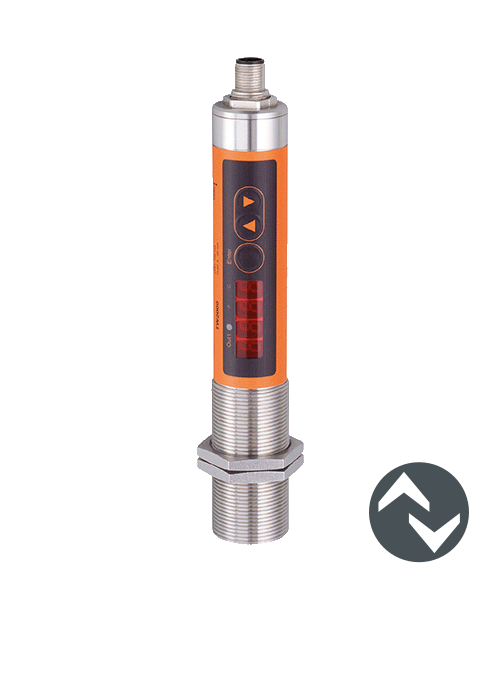
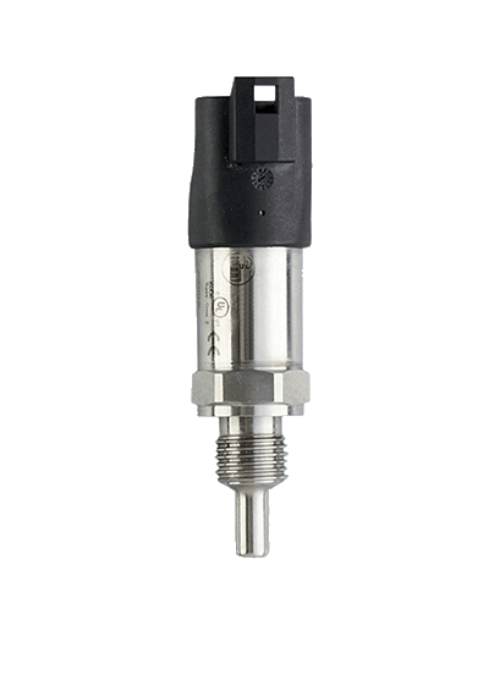
Sanitary transmitter with display, Type TD | Sanitary compact transmitter, Type TA | Sanitary flush transmitter, Type TA | Smart diagnostic transmitter, Type TCC | Industrial transmitter with display, Type TN | Industrial compact transmitter, Type TA | Temperature switch with adjustment dials, Type TK | Infrared temperature sensor, Type TW | Compact transmitter for mobile machines, Type TA / TU | |||
| *Dynamic response T05 / T09 [s]: “T05” and “T09” are the times the measurement take to reach 50% and 90% of the temperature change. |
|
|
|||||||||||||
|
|
|
|
|||||||||||
 |
 |
 |
 |
 |
 |
 |
 |
 |
||||||
Temperature range |
-148…1112 °F -100…600 °C |
-58…572 °F -50…300 °C |
-148…572 °F -100…300 °C |
PT100:
PT1000: |
-40…302 °F -40…150 °C |
-148…1112 °F -100…600 °C |
-40…30 °F -40…150 °C |
-58…284 °F -50…140 °C |
-13…320 °F -25…160 °C |
|||||
Insertion length |
RTD dependent | RTD dependent | RTD dependent | RTD dependent | 0.8…22" 20…560 mm |
surface mount … 7.9" (200 mm) | 0.8…13.8" 20…350 mm |
Flush seal | Surface mount / clamp-on 3/4"...2" tube size |
|||||
Output signal |
Analog Switch IO-Link |
Analog IO-Link |
Analog Switch IO-Link |
IO-Link | 4-wire RTD, Pt100 & Pt1000 | 4-wire RTD, Pt100 & Pt1000 |
4-wire RTD, Pt100 |
4-wire RTD, Pt100 |
4-wire RTD, Pt1000 |
|||||
Pressure rating |
- | - | - | - | 25…400 bar | Varies | 25 bar 160 bar |
16 bar | - | |||||
Response time* |
390 ms | 100 ms | 350 ms | RTD dependent | 1 / 3 sec | Varies | 1 / 3 sec | 10 / 40 sec | 7.5 / 25 sec | |||||
Accuracy |
+/- 0.54 F | +/- 0.54 F |
+/- 0.05 F IO-Link precision
+/- 0.1 F analog precision |
+/- 0.3 F analog precision |
+/- 0.27 F | +/- 0.27 F | +/- 0.27 F | +/- 0.27 F | +/- 0.45 F | |||||
Display |
|
|
|
|
|
|
|
|
|
|||||
Price |
|
|
|
|
|
|
|
|
|
|||||
|
Temperature monitor with display, Type TR | Temperature plug without display, Type TP | Temperature plug for sanitary applications, Type TP | IO-Link temperature module, Type AL | RTD probe, Type TM / TT | Surface mount, cabled RTD probes, Type TS | Sanitary RTD probe, Type TM / TT | Flush sanitary RTD, Type TM | Clamp-on RTD, Type TSM | |||||
| *Dynamic response T05 / T09 [s]: “T05” and “T09” are the times the measurement take to reach 50% and 90% of the temperature change. |

Technology overview
Construction technology
One-piece design
Typical RTD assemblies use a head chamber design. Many of ifm’s temperature instruments consist of a fully welded 316 stainless steel IP69K hermetically sealed construction. The fully calibrated and ready-to-install one-piece design solves all of the typical drift issues of head chamber systems.
Measurement technology
Thin film tip design
ifm uses a highly engineered construction method. The Resistive Temperature Detector (RTD) element is first bonded to a thin film carrier. This reduces the thermal mass of the electrical leads. The film carrier and RTD element is then attached to a specialized assembly carrier. The carrier positions the RTD element into precisely the correct location and preloads the RTD with constant force against the probe’s inner sheath wall. This allows the RTD element direct and constant controlled contact to the sheath, minimizing the amount of thermal mass separating the RTD element from the process media. The result – fast and repeatable response!
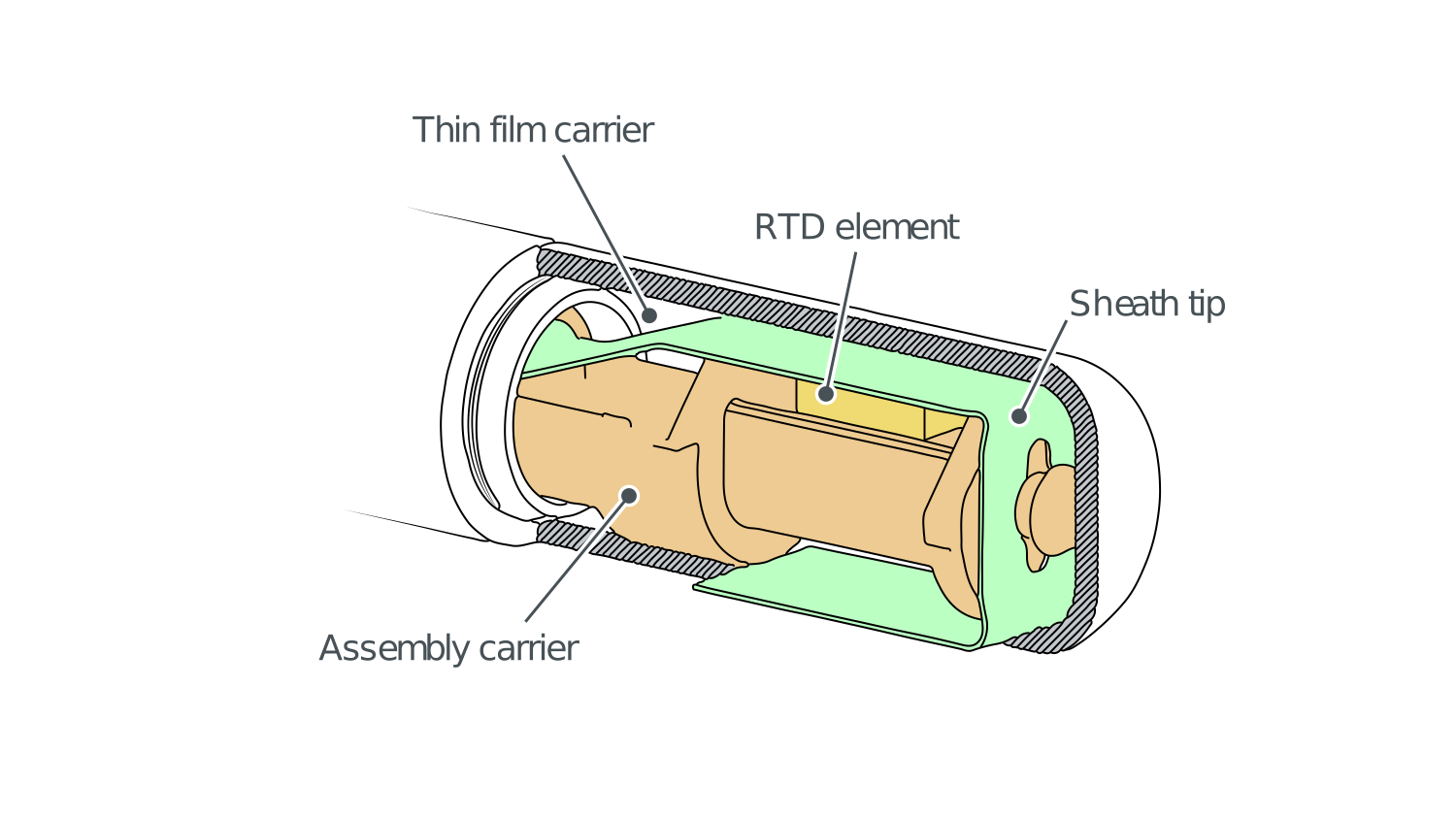
Ordinary RTDs and temperature instruments have the sensing element potted into the tip of the sheath tube. The potting compound acts like an insulator, slowing the heat transfer to the RTD element. Typically, the RTD element location is not controlled, but simply lowered by its lead wires into the sheath and glued into place. Both of these factors lead to poor uniformity, repeatability and response time.
Metallic bonded tip
This ifm design uses a revolutionary process that metallically bonds the RTD element directly onto the copper-plated inner wall of the probe tip. This creates very low thermal mass with a direct metallic bond for optimal heat transfer. The metallic bond technology eliminates all polymer parts allowing the sensor to be used at higher temperatures. Additionally the tip construction offers response speeds twice as fast as our already fast thin film design.
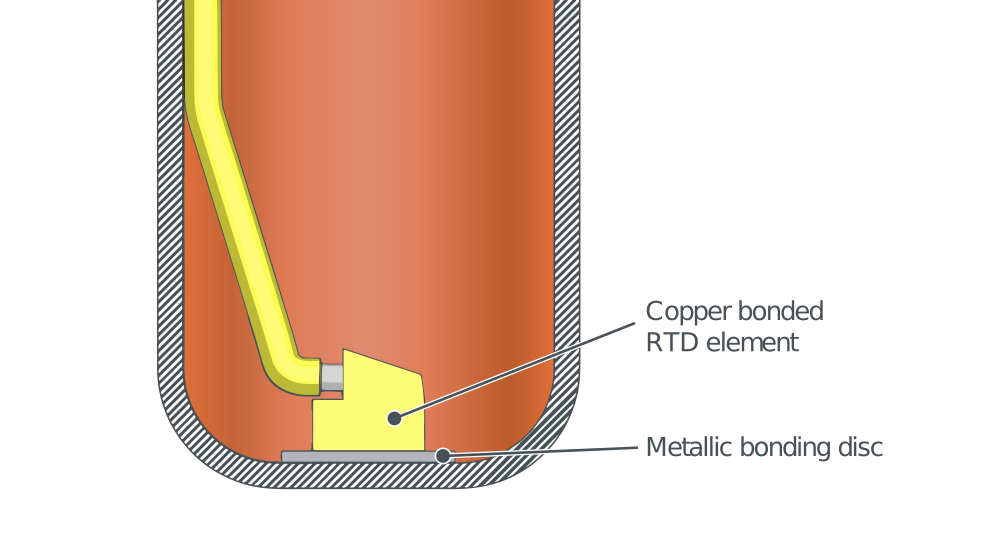
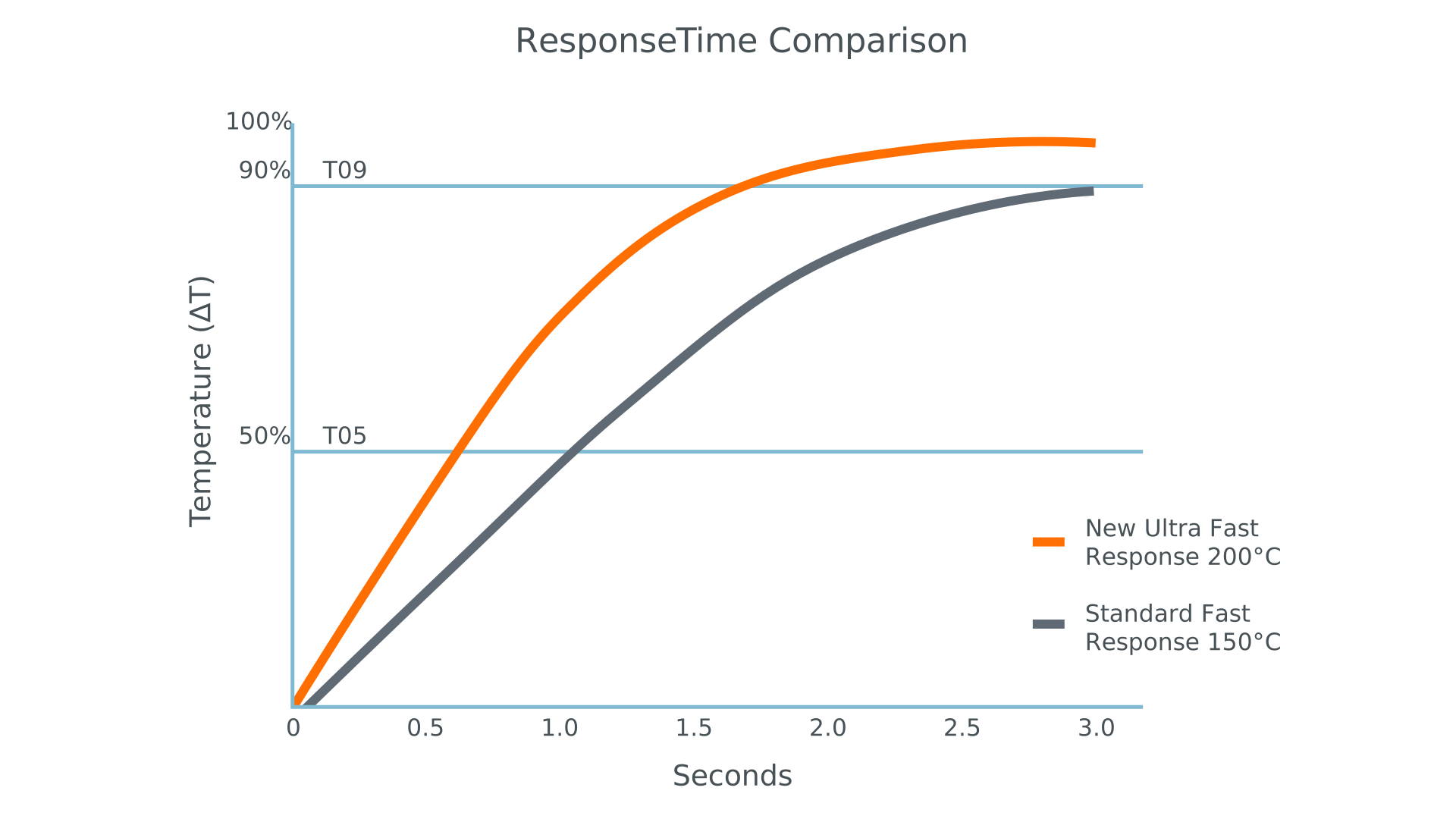
Response time difference from the thin film construction (blue line) to the metallic bonded (orange line) construction.
Self verifying dual-element tip
The design of the TCC family of instruments includes two sensing elements that self-detect and send a warning if any signal drift is occurring. The PTC (Positive Temperature Coefficient) element increases its resistance with increasing temperature. The NTC (Negative Temperature Coefficient) element decreases its resistance with increasing temperature. ifm uses a highly engineered construction thin film tip design and two RTD elements. Rather than identifying instrument drift during a normal calibration verification, the dual element construction signals drift as soon as it occurs. This improves machine reliability, but more importantly, does not allow suspect product out of your manufacturing plant.
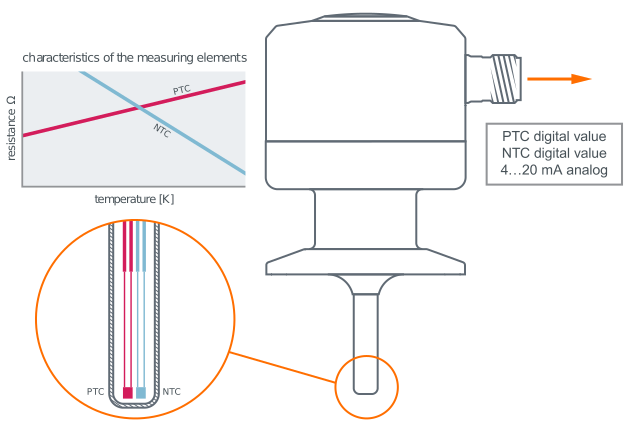
Because the PTC and NTC react to temperature change in opposite directions, the microprocessor is able to measures the differential between the two elements and alert the user to a potential decrease in accuracy.

The ifm clamp-on RTD was designed with careful consideration for the effects of ambient temperature on surface mount sensors. In the image to the right, you can see the RTD positioned to make direct contact with the pipe where temperature measurement occurs, with heat flow indicated by the red arrows. The increased contact area of the TSM design ensures optimal heat transfer between the sensor and the surface, leading to faster response times and more accurate readings.
Solid contact with the measurement area also reduces interference from ambient air, helping the RTD capture the true surface temperature without influence from surrounding conditions. Since air acts as a thermal insulator, slowing heat transfer, the TSM design incorporates an air pocket around the pipe for added insulation, while gaskets ensure secure mating for improved accuracy. The clamp mechanism is also specially designed to maintain proper contact.
Infared non-contact technology
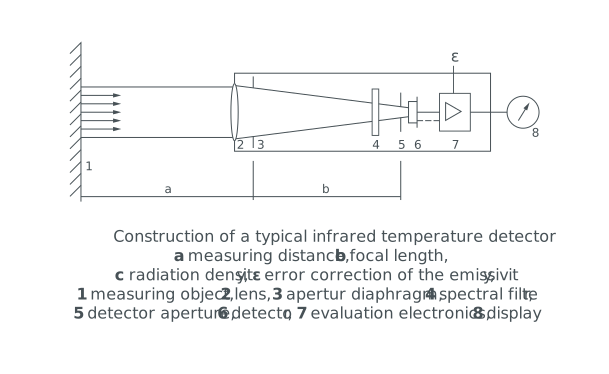
Infrared temperature sensors, sometimes called pyrometers, detect the amount of infrared (IR) radiation emitted from the object. A lens focuses the infrared radiation onto a detector, which converts the energy into an electronic signal. This technology enables temperature measurement from a distance without requiring contact to the object.