- R1D radar sensors for industrial applications
- Applications
- Level measurement
Enhance accuracy with R1D radar distance sensor

Radar sensors are an excellent solution for level measurement applications due to their ability to provide accurate and reliable readings in a wide range of conditions. They can measure levels of liquids, solids, or granular materials even in harsh environments, such as those with dust, steam, or extreme temperatures. Unlike ultrasonic or optical sensors, radar sensors are unaffected by factors like humidity, pressure, or the presence of vapors, ensuring consistent performance. Their advanced signal processing capabilities allow them to filter out noise and interference to maintain high accuracy. This makes radar sensors a robust and dependable choice for level measurement in industries such as agriculture, manufacturing, and water treatment.
Explore some of these applications below. Note: Sensor position and field of view shown are conceptual.
For each application, we show a 5-point rating scale:
- ♦ Plug-and-work
- ♦♦♦♦♦ Configuation required
Level measurement through tank wall
Monitoring chemical levels in IBC totes is essential for safety, compliance, efficiency, and product quality. It helps prevent accidents, optimize resources, and maintain environmental responsibility.
Modern automation systems increasingly favor continuous, non-contact methods, which may avoid the need for tote modifications by placing sensors outside the tank.
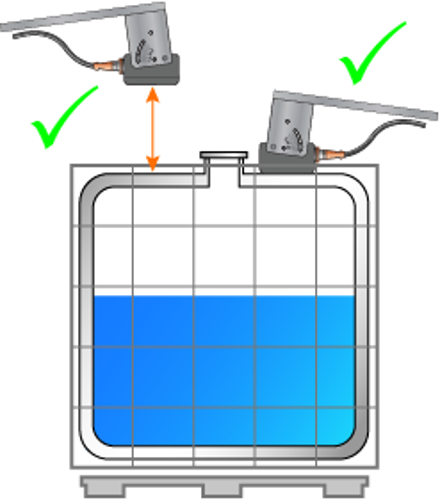
Direct-mount on top of the IBC tote: ifm’s radar sensor can be mounted directly on top of the tote, measuring chemical levels through the wall without needing brackets or holes. This is ideal for space-constrained setups.
Rack-mount: The radar sensor can also be positioned on a rack away from the tote, still measuring through the plastic wall. This setup is beneficial for fixed tote islands and frequent tote replacements, eliminating the need to remount the sensor.
Totes can be stacked or placed on shelves with space in between. A low-profile sensor can see through the plastic wall, making it versatile.
Radar technology excels here by differentiating between materials with different dielectric constants. The sensor filters out signals from the plastic wall, reliably detecting only the chemical inside.
- ♦
Level monitoring in tall, narrow tanks
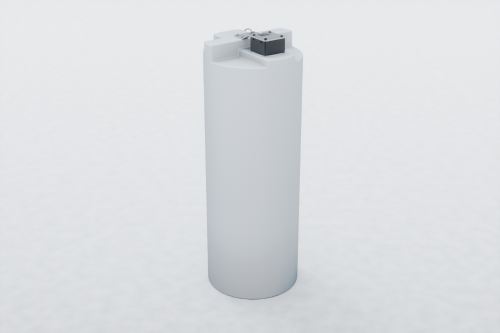
The R1D radar smart sensor has a small beam angle, minimizing reflections from tank walls and other internal structures. The strongest reflection from the medium below the sensor will always be recognized as the true target. Unwanted reflections can also be manually filtered.
The sensor can see through the plastic tank top or wall, so no tank modification is required.
The R1D sensor offers high precision and detects even small changes in level in tall tanks.
- ♦
Bulk material hopper level
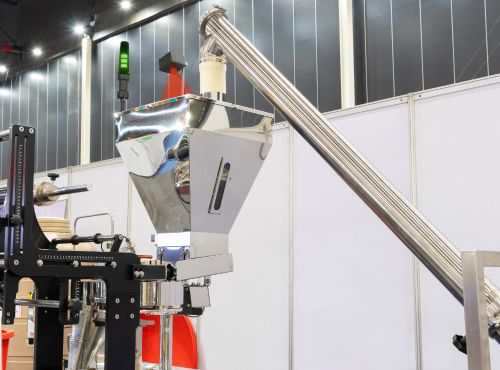
The R1D uses 60...64 GHz radio frequency for industrial applications and this range is well-suited for measuring bulk material level.
The sensor can penetrate through dust, smoke, and other particulates, making it effective for applications in harsh environments. This is especially useful in many industries where material level is uneven.
Adding an IO-Link enabled stack light to this application provides at-a-glance indication of level in the hopper even from a remote area.
- ♦
Conveyor level monitoring
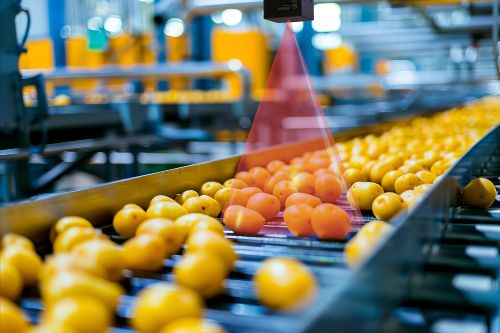
In agriculture, conveyors are used to transport bulk material, such as fruits and vegetables.
Advanced sensors, such as radar sensors, are used to ensure accurate height measurement of the conveyor belt in real time. The continuous monitoring provides valuable insights into the material flow, allowing operators to detect any abnormalities from the desired height profile remotely. Depending on the installation height, the radar sensor is able to cover almost the whole width of the common belt, providing reliable measurement across a wide area. Doppler effect can be utilized to measure the real conveyor speed, allowing for the calculation of the volume of the load.
The radar sensor is not affected by bright lights or dusts, making it a perfect solution for belt load monitoring in the agricultural industry. Thanks to the sensor’s fast response, any sudden change in height can be captured immediately.
- ♦
Conveyor belt monitoring
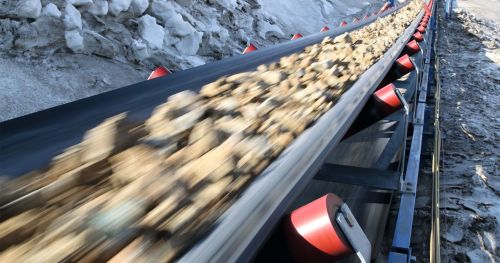
Conveyor belt monitoring is a critical aspect of mining processes, ensuring the efficient and safe transportation of goods. Advanced sensors, such as radar sensors, are used to ensure accurate height measurement of the conveyor belt in real time. The continuous monitoring provides valuable insights into the material flow, allowing operators to detect any abnormalities from the desired height profile remotely. Depending on the installation height, the radar sensor is able to cover almost the whole width of the common belt, providing reliable measurement across a wide area. Doppler effect can be utilized to measure the real conveyor speed, allowing for the calculation of the volume of the load.
The radar sensor is not affected by bright lights or dusts, making it a perfect solution for belt load monitoring in the mining industry. Thanks to the sensor’s fast response, any sudden change in height can be captured immediately.
- ♦
Outdoor waste level in open pit
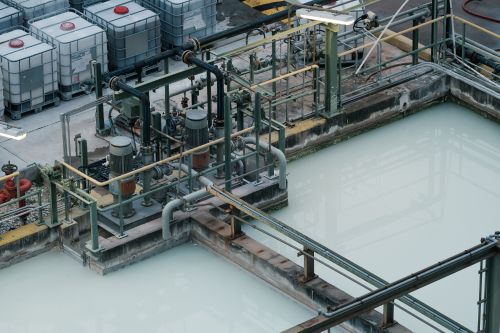
Radar technology is the best solution for measuring water / wastewater level outdoors in open pits or channels. With its long range, the R1D is suitable for large water reservoirs and pits. The sensor is not affected by weather conditions and it will continuously measure level in rain, snow, fog, wind, and dust without false switching.
The R1D sensor is also maintenance-free even installed outdoors. Water splashes on the sensor face do not affect its performance. Its wide operating temperature range (-40...185 ºF / -40...85 ºC) makes it extremely roboust when used outdoors.
- ♦