- Industrial water filtration
- IIoT journey
IIoT: Process improvements in real time
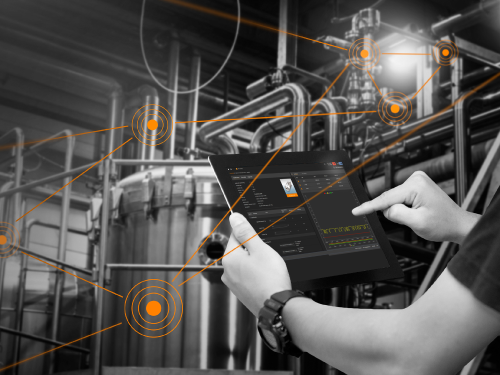
Industrial automation allows machines to operate autonomously. A programmed set of instructions directs the machine's actions based on parameter specifications. The Industrial Internet of Things (IIoT) takes this a step further. Beyond automating plant-level systems, it unlocks trapped data from sensors, valves, and other devices. This data can be converted into actionable insights, improving processes in real-time, even from remote locations. Using an edge processor implemented with machine-specific algorithms , you can predict, fine-tune, and improve processes at the individual machine level.
ifm commitment to IIoT
At ifm, we believe your journey to smart manufacturing should be easy to implement without the need for expensive consultants and long testing phases. We commit to the following:

IIoT projects must deliver clear and measurable benefits for manufacturing.

Technology should be "plug-and-work" with minimum friction for fast results in creating customer benefits.

Hardware and software should be easy to implement without specialized skills and consulting for integration.

Solution architecture should be "open" for communication with major hardware and software platforms.

Low-code software solutions are the best for reducing friction in improving time-to-market for IIoT projects.

Proof-of-concepts can improve project definition and create value that results in faster return-on-investments.

Your IIoT readiness checklist:
Digital transformation can be simple if you take a strategic approach from the beginning.
- Strategic alignment: Define the objective for adopting IIoT. Start with one application or case study that aligns with an important overall business goal.
Could improving the operator experience help you sell more machines?
Could remote monitoring of machines reduce the costs of service and repairs?
Would reduced programming time help you commission more machines annually?
- Evaluate & build your technology stack: Do you have the right technologies to support an IIoT initiative and are they ready to scale without involving integration specialists or consultants?
- Digital technology selection: Identify suitable technologies such as connected sensors, communication protocols, and automation companies that can deliver the information you need to prove the concept will work.
- Technologies should deliver on a proof of concept and easily scale for a successful implementation
- Open source technologies help you avoid locking your data into proprietary systems
- Data integration: Ensure that your data sources are designed to integrate with other open-source technologies. Selecting the right agnostic technologies allows you to seamlessly send your machine data to many software options.
- Process optimization: To adequately measure return on investment, you will need to benchmark your current processes with automation and visualization of data collection. This allows you to communicate the success of an initiative quickly.
- Process mapping: Document and analyze existing processes to identify areas for improvement.
- Automation opportunities: Identify tasks that can be automated to enhance efficiency.
- Lean implementation: Implement lean practices to reduce waste and streamline production.
- Quality control technologies: Adopt advanced quality control technologies for continuous monitoring and improvement.
- Monitoring & analytics: Implement real-time monitoring and analytics to measure performance and drive continuous improvement.
Adopting IIoT initiatives on water filtration skids requires a strategic approach to ensure you provide an enhanced experience for your customers. Selecting and investing in the right technologies from the beginning can help to ensure a successful transition. This checklist can serve as a starting point to help you assess if you have the resources to start an IIoT initiative.