Trucent upgrades centrifuge machine design with ifm IIoT solutions
As one of the nation’s largest distributors and installers of industrial centrifuges and fluid filtration and reclamation systems, Trucent recently sought ifm as a partner in their vision to modernize their machines.
Leveraging ifm IO-Link, ifm smart sensors, and software integration, Trucent reduced production costs, increased access to real-time data, and updated their service contracts for the next era of manufacturing. Switching from analog to digital connectivity, they gained remote access to real-time data to provide a better customer experience and enhance their service capabilities.
Benefits
 |
 |
 |
|
Streamlined hardware costs and installation time |
Gained access to remote monitoring |
Reduced the cost of service calls |
Estimated savings
- $40,000 reduction in hardware costs
- Reduced days of installation time
- 20% reduction in cost of maintenance & service calls


Project Goal
When Trucent acquired Centrasep, they wanted to analyze the current product offerings and find ways to standardize equipment to streamline operational efficiency of production and service. As part of the process, they decided to analyze their current technology stack to assess opportunities to upgrade machine controls and digitize to accommodate future growth.
The challenge
Jonathan Rendel was brought on as the only Controls Engineer at that time and needed to assess their methods of machine control to determine if newer, innovative options would yield any benefits. He consulted with all of their suppliers to assess potential opportunities to collaborate and upgrade their portfolio of machine controls, networking, and sensors. Ultimately, Jonathan determined that aligning on ifm sensors, controls and software between their Noblesville, Indiana location and their Dexter, Michigan headquarters would bring the greatest benefit.
The ifm solution
Switching from analog wiring to IO-Link masters immediately simplified the design of Trucent machines. The IO-Link-enabled sensors were easy to plug in and deploy. This resulted in a significant reduction of installation and commissioning time from months or weeks to days or even hours.


The side-by-side comparison shows an ifm IO-Link master in place of traditional analog wiring for a simpler setup.
Newly updated IO-Link connectivity, digital sensors, and smarter controls streamlined the service team processes. This reduced the time they needed to spend on troubleshooting basic functionality of their machines and instead freed them up to spend more time working on complex problems for customers.
HMI Controllers provided a simpler way to build visualizations of machine processes and whole system performance. This allowed them to start logging and trending data.



Technologies
Explore each of the platforms for more information.
 |
IO-Link technology increases the accuracy and amount of sensor data collected by machines. The simplified wiring and sensor parameterization processes provide immediate efficiency gains. |
 |
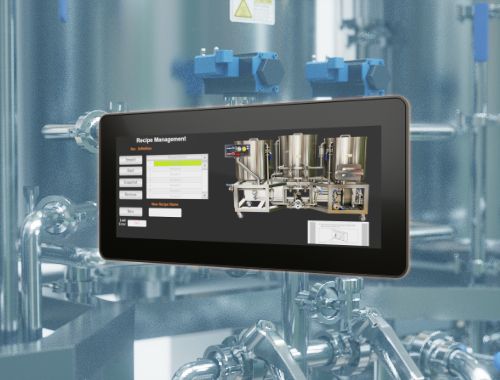
HMI Controllers combine PLC, HMI, and IIoT functionality in one field-mountable device. They provide operators an intuitive visualization of system performance on the production floor. |
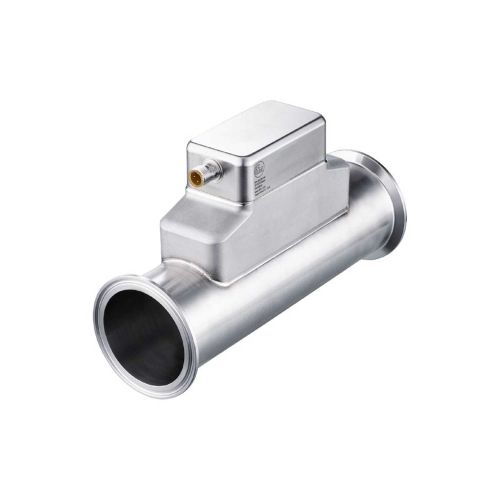 |
Flow sensors with a digital IO-Link signal measure multiple process values with one device, including media temperature, flow rate, and total volume. |
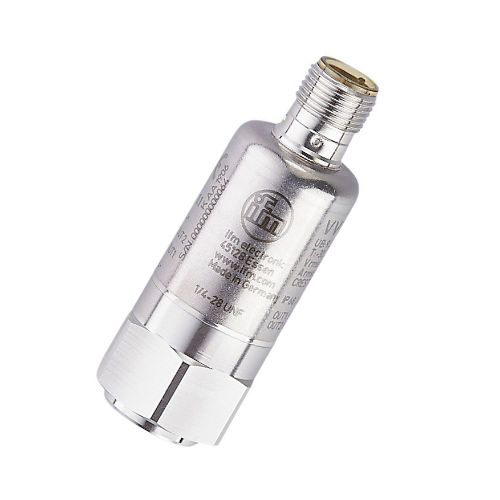 |
Vibration sensors measure real-time changes in machine condition, allowing users to monitor and identify degradation quickly to prevent damage and equipment failure. |
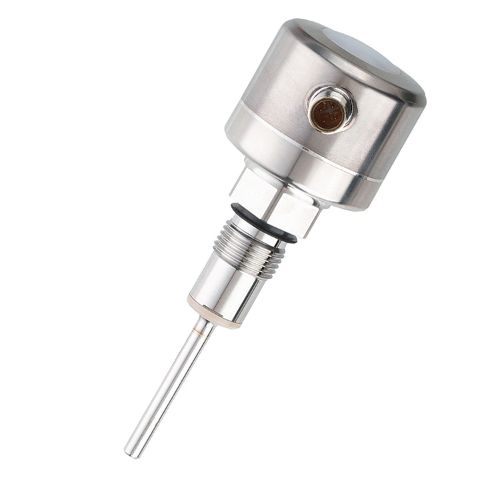 |
Temperature sensors with a digital IO-Link signal can provide additional diagnostic information, enabling more comprehensive machine condition monitoring for a large range of installation depths, environmental conditions, and extreme temperatures. |
Results
Reduced system cost and complexity
Switching from analog to digital IO-Link technology immediately reduced machine complexity and simplified setup, resulting in shorter commissioning time. Trucent reduced hardware costs and labor costs by streamlining setup and programming. Simpler deployment of new machines provides additional production capacity to accommodate business growth.
Optimized their service call processes with remote access to data
By establishing a secure, remote connection to their commissioned machines, the Trucent service team can access real-time machine data to better support their customers. This reduces the cost of service calls and resolves customer issues more quickly than before. By reducing the time spent troubleshooting, the service team has more capacity to focus on more proactive maintenance.
Improved the customer experience
Trucent implemented intuitive HMI controllers for machine-level visualization, providing a quick way for customers to assess machine performance quickly on the production floor. By reducing the time it takes to resolve service calls, customers experience less machine downtime and better performance.
Prepared for a future of growth
Trucent increased their production capacity by streamlining machine setup and programming, allowing them to meet increased demand. With a flexible technology stack, they are prepared to add machine functionality as needed. Switching to IO-Link provided the necessary networking to add a cloud connection and IIoT data flow in the future, opening the door to predictive modeling and analytics.
Conclusion
By standardizing with ifm sensors and controls, Trucent can now offer customers daily access to machine data that was previously not possible. Upgrading their machine control architecture improved machine performance and expanded functionality to provide a better experience for their customers. The newly automated systems enable Trucent to remain a leader in their industry and futureproofed their machine design to adapt quickly as new solutions become available.