How to overcome the most common predictive maintenance challenges
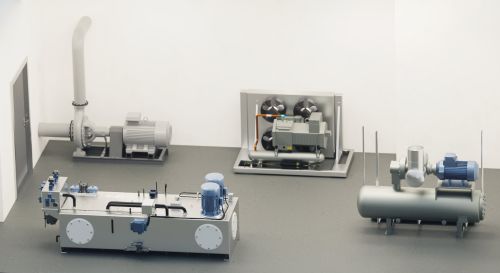
Predictive maintenance offers reduced unplanned downtime and better product quality. It uses advanced sensors, IIoT communication, and AI and machine learning to detect warning signs of equipment failure before it occurs.
While there are still significant challenges to implementing a predictive maintenance (PdM) program, it’s becoming easier to overcome these obstacles.
First, the cost surrounding implementation has dropped, and the ROI potential is high. Next, knowing the benefits of PdM helps get buy-in from stakeholders. Finally, understanding the operational challenges and how to overcome them helps ensure a smooth transition with fast, significant results.
This article:
-
Gives a brief overview of predictive maintenance
-
Outlines common challenges and why a program may fail
-
Explains how to overcome and avoid these scenarios
-
Explores the role of AI in predictive maintenance strategies
Predictive maintenance advantages and disadvantages
Benefits of predictive maintenance include maximized revenue, reduced operational costs, optimized maintenance schedules, enhanced safety and customer satisfaction, and improved sustainability.
However, the disadvantages of predictive maintenance implementation include:
-
Large initial investment
-
Internal resistance to new processes
-
Risk of failure
Fortunately, these challenges can be overcome with careful planning and the right solutions partner.
1. Investment
Implementing a predictive maintenance program costs less than before but still often requires significant budget and resources. Main considerations include:
- New sensor hardware to measure additional data, such as vibration, temperature, oil quality, pressure, and flow.
- Replacing existing sensors to access sensor-level diagnostics if current components lack connectivity technology, such as IO-Link.
- IIoT software to feed sensor data into AI and machine learning algorithms for analysis and connection to existing maintenance software.
- Time and resources to implement the system and integrate with existing infrastructure.
- Specialized staff to analyze machine-level data
Facilities with condition-based monitoring already implemented may have some of these components in place. Those using run-to-failure or preventative maintenance strategies may require a larger investment to transition to predictive maintenance.
Solution: Start small
A proof-of-concept project can cost as little as $10,000, with annual software agreements around $2,000. Starting with critical machines delivers optimal results and faster ROI, facilitating continued investment.
Launching a pilot project on a few assets minimizes initial investment while generating rapid cost savings. One automotive manufacturer achieved ROI in 2.5 months on a stamping press by preventing five weeks of downtime and saving $500,000 in maintenance costs with a small concept that only took one day to implement.
Sensors typically cost $300-$500 each and represent the largest expense, so using fewer significantly impacts costs. Implementing sensors with IO-Link technology enables manufacturers to collect multiple process values from a single sensor, reducing the number of required sensors and eliminating expensive analog card costs.
Defining project goals during the design phase helps establish ROI metrics to measure success and plan for future scaling.
2. Implementation
Setting up predictive maintenance requires machine downtime for sensor installation. That’s an expensive proposition, with just one minute of downtime costing a facility $22,000 to $260,000 per minute. Integrating new software with existing systems can become complicated and time-consuming.
Solution: Choose the right teams, times, and solutions
Organization with the right staff and communication can reduce downtime and minimize resource usage by handling the setup quickly and incrementally during strategic points in the process. An experienced solutions provider should coordinate an implementation strategy with a facility’s staff to create as little disruption as possible.
A licensed engineer can complete sensor and software installation within hours when creating a solution designed to simplify integration. Facility IT engineers can establish optimal timelines for IIoT software integration that preserve critical data, minimizing downtime while ensuring rapid deployment.
Preventing emergency downtime should outweigh this planned downtime.
3. Privacy and Security
PdM involves extensive collection of sensitive operational and equipment data, often transmitted across multiple locations and sometimes internationally. This creates risks of data leaks, unauthorized access to confidential information, malware, and cyber-attacks. Manufacturing firms alone were hit with more than 300 data breaches in 2023, leaking more than 87.7 million records.
Solution: Strong guardrails and governance
Planning predictive maintenance integration requires thorough understanding of an organization’s existing cybersecurity systems and data security protocols. Key safeguarding measures include:
- Isolating critical systems such as PLCs or SCADA (network segmentation.)
- Securing OT, IoT, and IIoT devices and systems connected to manufacturing.
- Enforcing robust login, identify, and access management.
- Data backup and encryption.
- Incident response plans and regular security audits.
Solutions providers should understand their software requirements and collaborate with IT technicians to confirm appropriate safeguards.
4. Training
A predictive maintenance program’s success relies on teams embracing new procedures and approaches to machine data. However, implementing PdM disrupts established processes, requires retraining, and sometimes faces resistance from employees wary of change.
Solution: Set the tone and training early
First, secure buy-in from all stakeholders, including maintenance managers and corporate decision makers. Identify and communicate the benefits that each will receive after implementing a predictive maintenance program. Next, identify any expertise gaps, such as the need for vibration analysts or data specialists. Before launching a proof-of-concept project, develop training materials for all system users that address:
-
The reason for implementing a new strategy.
-
How predictive maintenance works.
-
Training on tools and processes.
-
Skill-building in data literacy, technical skills.
-
A framework for continuous learning.
5. Scaling
Expanding predictive maintenance solutions beyond a pilot project introduces new challenges:
-
Allocating budget for equipment on more machines.
-
Coordinating more installation and training more teams.
-
Managing larger amounts of data, likely from multiple locations.
-
Addressing more alerts and work orders generated automatically.
Scaling also requires continuing improvement for teams and their processes, which is different from using a fairly consistent strategy and then reacting to emergencies.
Instead, first maintenance teams must adapt to automated work orders and predicted failures. Then, as AI and machine learning gain more insight and improve processes, managers must continuously optimize their teams’ efficiency.
Solution: Build on what has been successful
Apply insights from the proof-of-concept project to refine staff training, sensor installation, and process improvements. Adding only a few machines or teams at a time keeps data increases and workflow changes manageable and adaptable.
Maintain a strong ROI focus when expanding to additional assets, facilities, or teams. Assess how quickly expansions pay for themselves through time and cost savings. Simultaneously, develop strategic plans to leverage maintenance time saved from reduced emergency repairs.
Understanding the role of AI in predictive maintenance
Artificial intelligence (AI) is the analytical engine driving predictive maintenance systems. It processes vast amounts of sensor data to establish baseline equipment performance patterns and identify subtle deviations that indicate potential failures.
Maintenance teams must understand AI's role in assessing machine health and generating work orders to maximize predictive maintenance benefits.
Machine learning algorithms continuously analyze historical and real time data. They improve over time, learning from each maintenance event to refine future predictions. The system simultaneously correlates multiple variables, such as vibration, temperature, pressure, and operational context, to distinguish between normal variations and true warning signs.
Beyond failure prediction, AI optimizes maintenance procedures by:
-
Recommending specific repair actions based on detected issues.
-
Calculating optimal maintenance windows to minimize production impact.
-
Identifying root causes of recurring problems.
-
Continuously refining prediction models as more data becomes available.
However, statistical modeling and AI algorithms are only as good as the quality of data that trains the model. The technology may fail to deliver on promises when intermittent or insufficient data is not enough to recognize anomalies in production data that indicate future problems.
1. Not capturing enough data
This issue presents in three ways:
- Not measuring the correct data from machines: Machine learning requires baseline machine health information to detect changes and anomalies. Vibration, flow, temperature, pressure, and electrical performance information are all critical data points.
- Only capturing data after a failure: Capturing data only right before or after a machine failure doesn’t allow the model to learn and understand optimal conditions.
- Capturing data intermittently: Sensors that continuously measure often don’t collect enough machine data to make meaningful conclusions. This is common with wireless sensors and complex data like vibration, where it is too expensive to send datasets large enough for deciphering mechanical vibration patterns.
To prevent this, audit existing data collection and storage systems, and understand machine operations and risks. Collaborate with a solutions provider to identify gaps.
2. Insufficient baseline or failure information
A predictive system requires baseline and failure information to understand the trajectory from a healthy machine to one that’s failed. The model can’t project the conditions that lead to failure when interventions on a critical asset are too frequent and prevent all breakdowns.
Overcoming this gap requires expertise but remains achievable through two approaches:
- Simulating failure data: Engineers use tools like failure mode effects analysis (FMEA) to adjust sensor data and simulate failure scenarios for AI and machine learning applications.
- Tracking machine degradation: Raw sensor data analysis using unsupervised machine learning and/or principal component analysis (PCA) can reveal gradual machine deterioration.
3. Inability to work with the system
An AI-based predictive system's success depends on team implementation of its recommendations. Relying on old procedures, inadequate data comprehension, or poor integration with existing computerized maintenance management systems (CMMS) undermines PdM effectiveness.
Preventing this issue requires comprehensive buy-in across an organization. Team training and robust integration with existing software are also essential. Staff who understand and value the system's functionality will adopt this new strategy and help optimize it.
How to get started
The best predictive maintenance strategy is simple to implement and maintain. It also prepares a facility for the future. The best way to create a customized preventative maintenence program is to start with a proof-of-concept project. For a free consultation with a Solutions Architect, fill out the form below.
For immediate assistance, contact our service center:
info.us@ifm.com
800-441-8246