- SDP gap distance sensor
- Applications
SDP gap distance sensor: Applications
The technology in the SDP gap distance sensor enhances machining accuracy and consistency by detecting misalignments and improper seatings, such as those caused by dirt or chips.
This article covers:
- Part seated monitoring
- Surface quality measurement
- Zero gap / clogging detection
Part seated monitoring
When a workpiece is misaligned with the tool table, or the tool head is not properly seated in the tool holder, the machining process will not yield 100% consistent results among and within batches. Typical solutions like differential pressure systems cannot detect the most minute gap with small enough resolution.
The SDP sensor detects misalignment due to dirt, chips or other causes with a resolution of 1 µm and reliably signals go / no go status of the process, ensuring the quality of the end products.
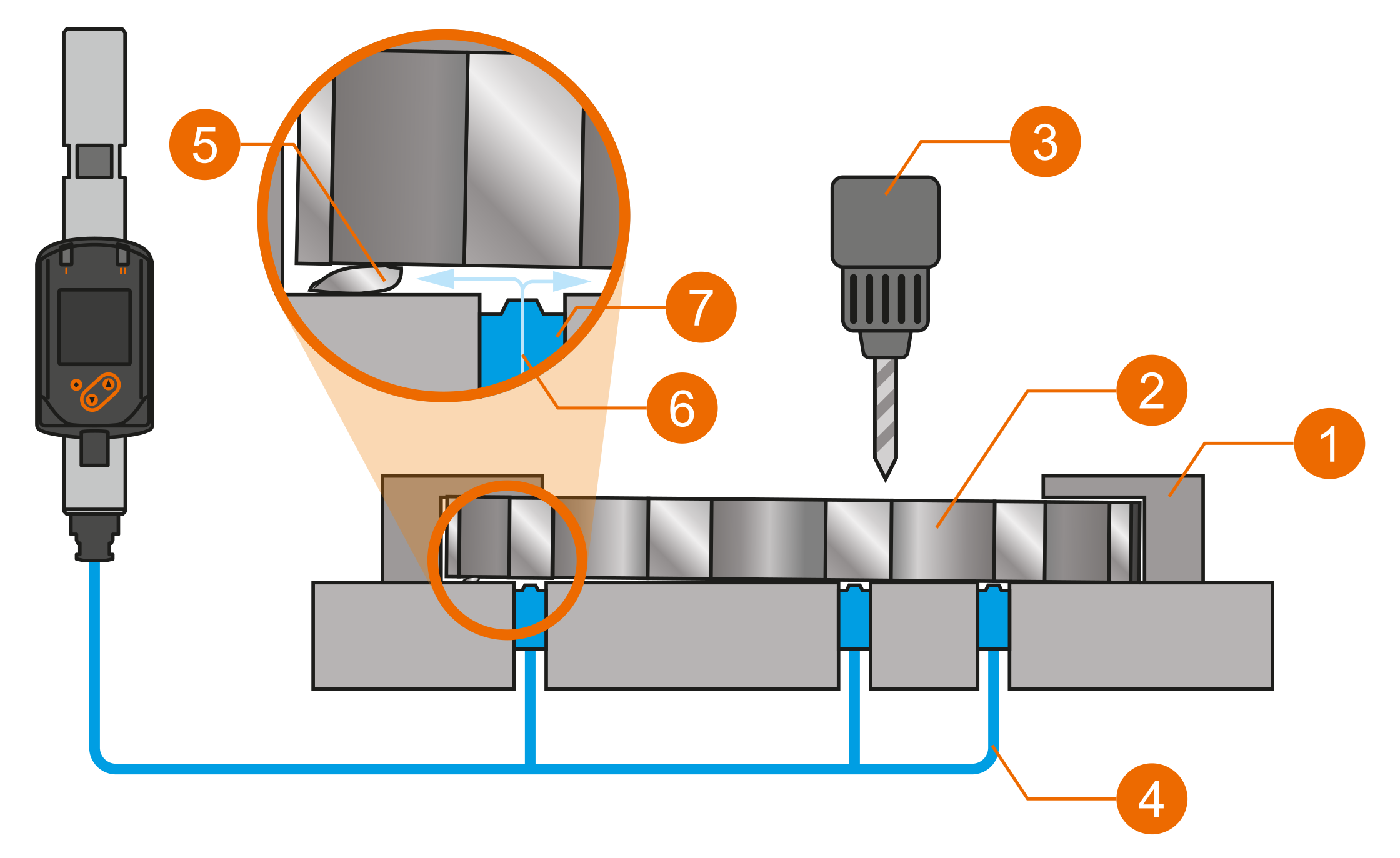
Typical part seated application in a machining center
| 1 | Clamping fixture |
|---|---|
| 2 | Workpiece |
| 3 | Milling machine |
| 4 | Air hoses |
| 5 | Metal chips |
| 6 | Air supply |
| 7 | Air nozzle |
Surface quality measurement
The SDP sensor measures the distance between the air nozzle and workpiece with a measuring range of 0...500 µm and a repeatability of ± (3% of the measured value + 2 µm). Depending on the application setup, this can correspond to an accuracy of 5...10 µm. This fine accuracy can provide precise measurement of surface finish control.
| Surface 1 | Surface 2 | Surface 3 | Undefined | |
 |
 |
 |
 |
|
| SDP measured value | 0 mm | 0.003 mm | 0.006 mm | 0.025 mm |
Zero gap / clogging detection
Conventional measurement technology uses a differential pressure measurement to determine the gap distance and detect a good/bad area or indicate a pressure difference in mbar as a relative measuring system. These systems generally do not have the resolution to clearly detect a gap with a distance of 0 (zero gap), or a clogged nozzle.
Because the SDP sensor also measures flow in addition to pressure, it can detect a no flow condition due to a zero gap or clogged nozzle.