Smart sensors for a sustainable food future: How ifm technology transforms food production
Smart process sensors: the foundation of sustainable food production
- Optimize cleaning and reduce waste
- Enhance product quality with accurate monitoring
- Achieve transparency and efficiency through digitalization
Sustainability and efficiency have become essential priorities in modern food and beverage manufacturing. Every stage - from raw ingredient handling to filling and cleaning - requires precise monitoring to maintain quality while reducing waste. ifm’s smart sensor technology and IO-Link connectivity help food producers achieve these goals by bringing transparency, control, and intelligence into every step of the production process.
Smart process sensors: the backbone of sustainable production
In today’s automated food plants, every parameter matters - flow, temperature, pressure, and conductivity all influence both product quality and resource consumption. ifm’s smart process sensors continuously monitor these critical values and communicate them digitally through IO-Link.
This allows food processors to:
- Detect deviations instantly
- Optimize water and energy use
- Minimize chemical waste during cleaning cycles
- Maintain full traceability of process data
Whether it’s monitoring the flow in a filling line or verifying pressure in a CIP skid, these sensors provide real-time data that helps operators make data-driven decisions and avoid over-cleaning, product loss, and downtime.
How IO-Link technology enables efficiency
IO-Link technology is at the heart of ifm’s digitalization approach. It ensures loss-free data transmission between sensors and the control system while also providing access to diagnostic and secondary parameters.
For example:
- LDL conductivity sensors measure cleaning agent concentration and monitor transitions between acid, alkali, and rinse water in CIP systems - ensuring accurate cleaning with minimal waste.
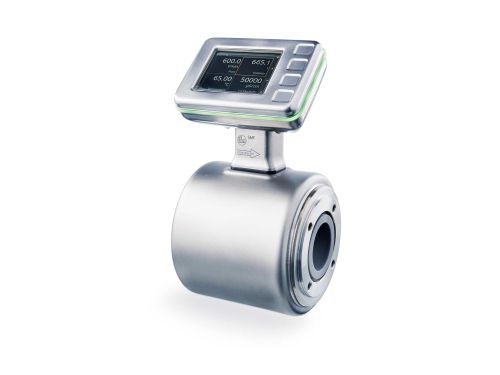
- SM FoodMag flow sensors measure multiple process values - flow, total volume, temperature, and conductivity - helping operators optimize filling and cleaning processes.
- PI pressure sensors with flush ceramic measuring cells and hygienic stainless steel housings ensure accurate pressure measurement, even under extreme temperatures and cleaning conditions.
- TT temperature sensors provide precise and rapid response for temperature validation in heating, cooling, and sterilization steps.
All these devices communicate seamlessly via IO-Link, allowing process adjustments in real time.

Sustainable benefits for the food industry
Implementing ifm’s smart sensors in food production provides measurable sustainability gains:
- Reduced water and chemical consumption: Real-time conductivity and flow measurement ensure cleaning cycles are optimized.
- Improved energy efficiency: Precise temperature control and pressure monitoring prevent overuse of heat or compressed air.
- Higher product quality: Continuous monitoring ensures consistent processing conditions.
- Increased uptime: Predictive diagnostics reduce unplanned downtime and maintenance costs.
- Full transparency: Digital data logging simplifies audits and compliance with food safety regulations.
By connecting sensors to systems such as moneo, plant operators can visualize and analyze all process data, improving decision-making and long-term process optimization.
Conclusion
With growing demand for safe, sustainable, and efficient food production, smart process sensors have become essential. ifm’s IO-Link-enabled solutions - from conductivity and pressure sensors to flow and temperature sensors - help manufacturers reduce waste, conserve energy, and maintain the highest hygiene standards.
By adopting ifm’s digital process monitoring solutions, food and beverage plants can achieve sustainability and quality without compromise - turning every sensor signal into smarter, cleaner, and more efficient production.