GH Induction – Digitalised induction heating
|
|
Summary GH Induction uses ifm’s IO-Link technology for digital induction heating. The benefits include an 80 per cent increase in productivity, automated inductor changes and precise process monitoring during hardening. |

Induction + IO-Link = maximum efficiency
How a Spanish specialist in induction heating is making the most of digitalisation
The GH Induction Group, with headquarters in Valencia, Spain, is one of the leading companies in the field of industrial induction heating. With more than 65 years of experience and sites in eight countries, GH Induction develops customised solutions for a wide range of sectors, including the automotive industry, rail transport, aerospace, the energy industry and oil and gas infrastructure. The portfolio ranges from heat treatment and welding to adhesive curing.
“Our machines are used wherever a controlled and efficient supply of energy is crucial to the manufacturing process,” says Pedro Moratalla, COO at the GH Induction Group. One of the company’s strengths is the customised development of the devices and inductors required for the precise heating of workpieces. To ensure this, close coordination with customers is required, as the COO confirms: “Our flexibility and close relationship with our customers are what really set us apart. We support our customers every step of the way, from development through to after-sales service, and customise every inductor and system precisely to the specific requirements.”


Image 1: Every customer application requires a customised inductor for targeted material heating.
Image 2: The development of inductors is one of GH Induction’s core competencies.
Tailor-made solutions for a digitalised industry
With the growing demand for efficiency, transparency, sustainability and process control in industries, GH Induction was faced with the challenge of making its highly customised systems even more flexible and capable of digital integration. Therefore, a key objective was to design the machines in such a way that they could be fully integrated into digital manufacturing environments. “The industries are evolving rapidly. We had to find solutions that would make our systems smarter, more efficient and more reliable – without compromising on customisation,” says Pedro Moratalla.
Automation and sensors from ifm as a driver of innovation
GH found the solution to this challenging task through a close partnership with the automation specialist ifm, whose solutions are now an integral part of GH’s systems. “We rely on ifm products because they offer outstanding quality and we can always count on technical support from our contacts,” says Juan José García, Coordinator of Electrical Engineering and Generators at GH Induction. “This helps us to meet our customers’ high expectations of the service we provide.”

Numerous sensors ensure that processes run smoothly
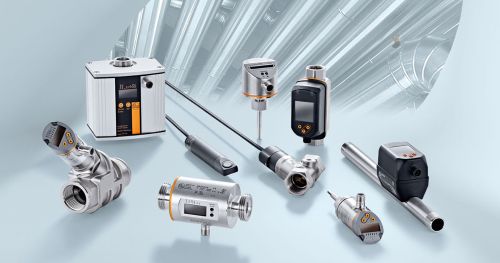
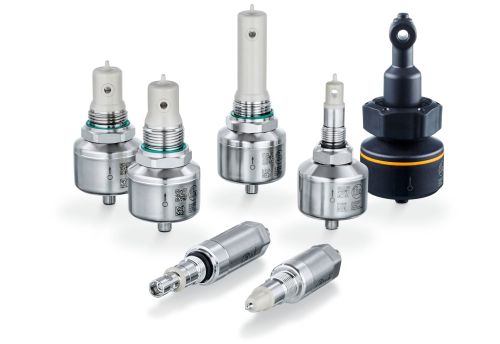
GH now uses a wide range of ifm components for the digitalisation and automation of its manufacturing processes: inductive sensors and light barriers ensure precise detection of workpieces, while flow meters and conductivity sensors enable continuous monitoring of the various cooling circuits. RFID readers uniquely identify the inductors to be used for metal treatment, and QR code readers ensure full traceability of every single component processed. Safety solutions such as light grids complement the product range and help to ensure operational safety.
IO-Link: easy digital data communication
A key milestone in the move towards the digitalisation of plants was the introduction of IO-Link. The open industrial communication standard was co-founded by ifm and has long since become established in the industrial sector. The reasons: integrating the sensors into an IO-Link structure is extremely simple. Even staff without specialist knowledge can connect the equipment without any problems thanks to standardised cables. As the data is collected locally in the field via field-compatible IO-Link masters and forwarded in consolidated form, the amount of cabling required is significantly reduced. This makes it possible to establish seamless digital communication from the sensor-actuator level to the controller and, in parallel, right up to the IT level in no time at all.
Higher productivity, higher quality, fewer errors
At GH Induction, IO-Link also forms the technical basis for the automated change of inductors – a process that used to be carried out manually, involved downtime and was a source of errors. “By using IO-Link, we have been able to increase productivity by up to 80 per cent in many applications and virtually eliminate errors,” reports Juan José García. Furthermore, IO-Link also plays a key role in quality assurance. The process monitoring system for hardening, developed in-house by GH Induction, is based on reliable data acquisition using ifm sensors.
“Thanks to IO-Link, we receive a wealth of data from each sensor, giving us a very detailed picture of the process flow.”
In addition to the actual process value, IO-Link sensors transmit further information, such as temperature, operating hours or operational status. “Any interruption in monitoring can lead to rejects and damage to our reputation. That is why it is important to us to have a clear overview of the process and of every single sensor at all times. The robustness and reliability of the sensor technology, as we experience it in ifm products, is absolutely crucial for us and our customers,” emphasises Juan José García.


Image 4: The rotational behaviour of the spindle is monitored using the VVB3 three-axis vibration sensor.
Image 5: The LDL101 conductivity sensor and a TA type temperature transmitter provide important information about the condition of the coolant.
Advantages: increased productivity, process reliability and digitalisation
Flexibility in the design of new systems has also increased: the versatility and compatibility of ifm’s products and solutions enable GH Induction to respond quickly and cost-effectively to individual customer requirements. “Our collaboration with ifm is always goal-oriented and based on partnership. The technical expertise of our contacts and ifm’s innovative strength have been instrumental in helping us implement our digitalisation strategy,” concludes García.

Image 3: The IO-Link master collects data from the sensors locally and forwards it via PROFINET to the controller and IT infrastructure.