Optimum use of gases for ideal welding results
Exact dosing of expensive gases ensures the best possible results and cost savings

Cost
saving

Higher system
availability

Enhanced
welding quality
Results
- Cost savings through optimized use of expensive gases
- Increased system availability through more precise and lower gas consumption
- Optimal results in the welding process through adapted environmental conditions
The challenge
Special gases, such as argon and CO2, are used when welding battery cells for electric vehicles. Controlling the flow of these gases is vital for ensuring the welding quality. On the other hand, exactly the right amount of each gas should be used. Excessive gas consumption does not improve the process, but it does increase costs unnecessarily.


The solution – why ifm?
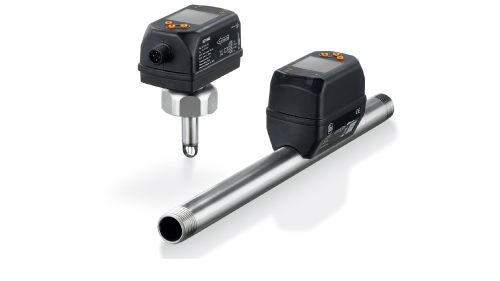
The SD5600 flow meter is calibrated and reliably measures the consumption of argon (Ar) and carbon dioxide (CO2) with a high level of accuracy, repeatability and dynamics. Since the flow meters have an IO-Link interface, they not only provide precise gas flow measurement, but also enable the customer to monitor the pressure of the gases using the same sensor. This allows the customer to save energy, which has a big impact, particularly when using expensive gases like argon and CO2. In case of deviations, the visualization of the measured values on the display by means of red and green indicators helps to clearly identify the permissible system values on the production line.
The company also uses ifm sensors beyond the production line itself: A low-cost SA5000 flow sensor is used to measure the exhaust air. The pneumatic system is monitored by a PQC812 pressure sensor with very high overpressure and underpressure resistance and a clearly viewable and individually customisable TFT display.