Less gas, more transparency
Using moneo Cloud to reliably record consumption data and identify potential savings

Reducing CO₂ emissions

Making process values visible

Identifying deviations immediately
Results
- Transparent and continuous monitoring of gas consumption
- Identification of potential savings based on reliable consumption data
- Around 100 kg of gas savings identified over a single weekend during the trial
- Automated alarms and notifications via Microsoft Teams or Slack
The challenge
Parrot Dog wanted to further reduce its production costs and therefore took a closer look at its CO₂ consumption. As a first step, the brewery installed a nitrogen generator to replace CO₂ with self-generated nitrogen wherever the process allows. This had already resulted in significant savings. However, to identify further potential for optimisation, the actual gas consumption needed to be recorded more accurately and continuously.
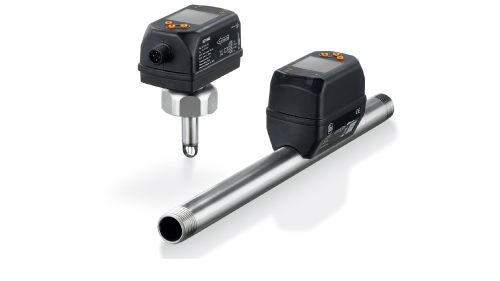
For this purpose, two ifm SD flow sensors were installed in the supply lines. Initially, the consumption values were read manually and transferred to a central spreadsheet. However, as different employees recorded the values at different times and during different production cycles, the data did not provide a consistently comparable basis. This made it difficult to reliably assess actual consumption and potential savings.


The solution – why ifm?
As ifm components and an IO-Link infrastructure were already in place, the existing process data could be put to greater use. With moneo Cloud, the measured values from the flow sensors can be centrally recorded, visualised and analysed. Individual data points are thus transformed into useful information, making it easier to track consumption patterns and identify deviations.
A one-week trial with moneo Cloud already demonstrated the benefits of continuous data analysis: the previously assumed consumption figures proved to be inaccurate. Over just one weekend, savings of around 100 kilograms of gas were identified. This provided Parrot Dog with a much more reliable basis for assessing actual consumption and identifying further optimisation potential.
Webhooks also allow alarms and notifications to be sent to applications such as Microsoft Teams or Slack. Users can be assigned to specific groups depending on their shift or area of responsibility, ensuring that relevant information reaches the right people directly.