Wilfatec – Maximum grip on the runway
|
|
Summary SMETS develops specialised vehicles for runway cleaning, which Wilfatec equips with control and automation technology as well as components from ifm. The result is high-performance, high-pressure vehicles that safely and efficiently remove rubber debris from runways worldwide. |

Mobile machines for runway cleaning
How Wilfatec equips high-pressure cleaning trucks with automation technology from ifm to clean airport runways around the world.
When a wide-body aircraft touches down, its tyres and the runway are subjected to enormous forces. An Airbus A380 can leave behind up to 20 kilograms of tyre rubber during a single landing. The rubber remains on the runway as deposits in the touchdown zone – the area where the aircraft’s wheels first make contact with the runway. If these rubber deposits are not removed regularly, runway friction decreases, particularly in wet conditions. Regular runway cleaning is therefore essential for ensuring safe take-offs and landings at airports around the world.
The company SMETS Technology develops, manufactures and sells specialised vehicles designed specifically for this purpose. “We produce ultra-high-pressure water cleaning systems for airports to remove rubber deposits from runways. Our vehicles are also used on public roads, for example to remove oil contamination or road markings,” explains Managing Director Dr Sascha Smets.
To ensure that these high-performance machines operate reliably worldwide, the manufacturer relies on Wilfatec’s expertise in automation. Based in Ulm, Germany, the company develops control and automation solutions for mobile machinery, integrating key components from ifm.
Control technology for small and medium-sized enterprises
Wilfatec has its roots in commercial vehicles and vehicle body building. Drawing on his practical experience, founder and Managing Director Jürgen Wilhelm recognised early on that many medium-sized manufacturers need support in implementing modern control technology.
“The idea behind Wilfatec is to provide our customers with control systems that are easy to handle and straightforward to wire,” says Jürgen Wilhelm.
The projects are as varied as the mobile machinery they are designed for. They include sweepers, waste collection vehicles, tankers, pellet transporters and specialised airport vehicles. Digitalisation is a key focus. Functions that previously relied on relay technology and complex wiring can now be implemented much more flexibly and efficiently using intelligent control systems.
High pressure against rubber deposits
One such specialised application is the ARC 2400 airport runway cleaner from SMETS Technology
At first glance, the vehicle’s task sounds simple: It removes rubber deposits from runways. From a technical perspective, however, the process is highly complex. Using water pressures of up to 2,500 bar, rotating cleaning nozzles remove the rubber deposits from the surface. At the same time, the removed material is vacuumed up and collected in the vehicle. The high rotational speeds ensure that the runway itself is not damaged by the water pressure. This places high demands on performance, precision and reliability.


Image 2: Night-time cleaning at the airport: The ARC 2400 removes rubber deposits from the touchdown zone.
Image 3: View of the cleaning unit from below: Rotating water nozzles use ultra-high-pressure water to effectively remove rubber deposits from the runway surface.
Slow speeds for perfect results
“To achieve good cleaning results, the vehicles need to be able to travel at very low speeds of between 4 and 80 metres per minute. This is not possible with a conventional truck drive,” explains Dennis Wilhelm, who is also Managing Director of Wilfatec.
This is why SMETS uses a hydrostatic drive system with a control solution developed by Wilfatec. The control system precisely coordinates the vehicle speed, high-pressure system and cleaning units.


Image 1: Wilfatec develops controllers and automation solutions for mobile machinery, integrating high-performance components from ifm.
ifm in action
At the heart of the vehicle automation system is the CR721S mobile controller from ifm. It connects sensors, drives and cleaning systems and automates complex processes.
Robust sensor technology from ifm provides the basis for the automation system: pressure and temperature sensors continuously monitor critical operating conditions, including the levels of the water and wastewater tanks, while an RFID sensor simplifies user login.
The ecomatDisplay CR1204 serves as the central operator interface. Cleaning parameters such as water pressure and speed can be configured here, while all operating and diagnostic data is displayed in real time.
“SMETS’s key requirement was for the entire vehicle to be controlled from the truck cab. The CR1204 display allows the operator to adjust all settings and provides centralised control of all components,” explains Dennis Wilhelm.
Automation not only makes operation more convenient, but also reduces operator errors.
“All the operator has to do is press a button and everything else happens automatically. This minimises potential sources of error and makes the vehicle much easier to operate,” says Wilhelm.


Image 5: Robust ifm pressure sensors monitor the machine’s hydraulic and pneumatic systems.
Image 6: Located directly next to the steering wheel, the CR1204 ecomatDisplay allows the operator to adjust all settings.
Robustness as a safety factor
At airports, every minute counts. If a vehicle breaks down, this can significantly disrupt operations. Reliability is therefore a key consideration in vehicle development.
“It is crucial that our vehicles can leave the runway immediately in any situation. Within eight seconds, they can raise their cleaning units, switch to normal driving mode and leave the runway at speeds of up to 90 km/h,” explains Dr Sascha Smets.
In use worldwide
SMETS’s vehicles have already demonstrated their performance and reliability at airports around the world, in a wide range of climatic conditions: “Whether in the cold of Scandinavia or in Dubai at temperatures of up to 50 °C, the components perform reliably under these conditions,” emphasises Dennis Wilhelm.
Dr Sascha Smets also considers this robustness essential: “Our vehicles are in use on almost every continent and in all climate zones. This is why designing them to be durable and robust is very important.”
This is complemented by ifm’s extensive range of controllers, displays, sensors and accessories.
“Working with ifm is ideal because we can source all the products we need from a single supplier. We have dedicated contacts and have never been let down when it comes to new projects,” Dennis Wilhelm concludes.
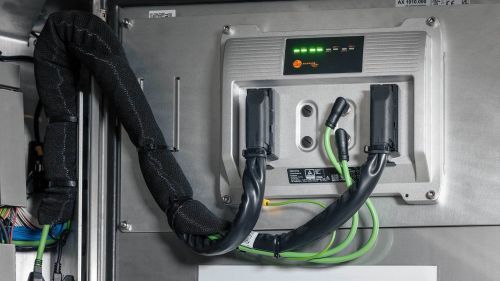
Image 4: The CR721S mobile control system from ifm forms the heart of vehicle automation and links sensors, drives and cleaning systems.
Conclusion
The airport runway cleaner from SMETS demonstrates how modern automation technology can make mobile machinery more efficient, safer and easier to operate. While SMETS develops the highly specialised cleaning technology, Wilfatec provides the intelligent networking and control of all functions.
The result is an integrated automation solution comprising controllers, displays, sensors and RFID technology, designed for use around the world. The robust specialist vehicles enable airports to keep their runways safe and operational at all times. At the same time, this application demonstrates how Wilfatec harnesses the capabilities of modern ifm technology for a wide range of mobile machines.